Planetary Health NewsStrengthening community and restoring the health of our planet.
Planetary Health: What Does It Mean And Why Does It Matter?
Connecting with nature on the Grand Canyon walk in the Blue Mountains. Photo credit: Laura Barry
The concept of planetary health is rapidly gaining attention globally, as the world increasingly confronts the interconnected challenges of environmental degradation, climate change, and public health crises. But what does the term ‘planetary health’ really mean, why does it matter and what prompted Blue Mountains City Council’s focus on planetary health?
Key Points:
Planetary health is a rapidly growing interdisciplinary field and movement, recognising the interconnectedness of human health and the Earth’s natural systems.
Australia faces specific vulnerabilities to climate change, biodiversity loss, pollution and food security to name just a few.
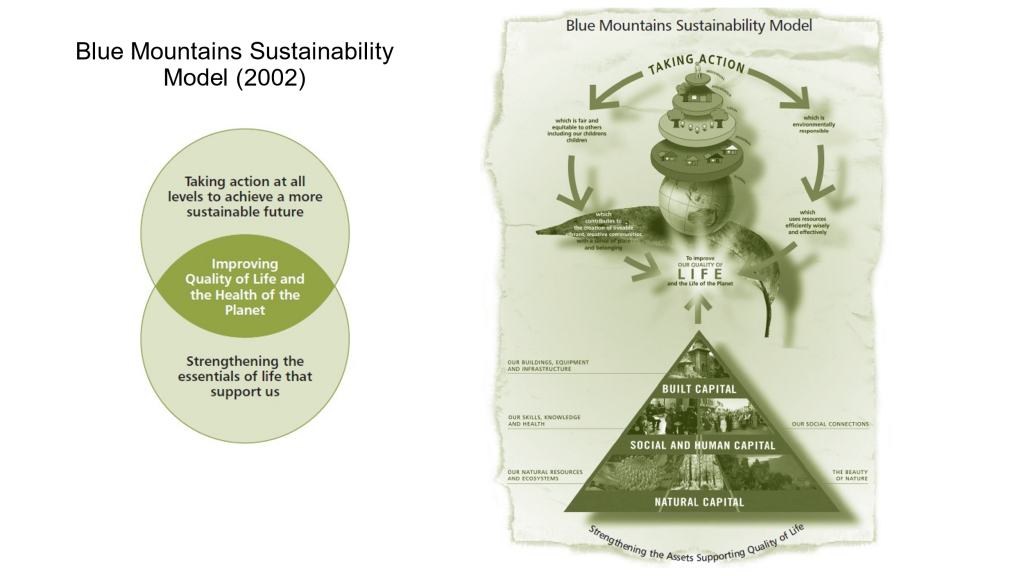
Blue Mountains City Council forged an early path in the movement with planetary health central to its 25-year old Sustainability Model and Map for Action. This has culminated in the development of a Council-run Planetary Health Centre, focused on systemic change.
Blue Mountains City Council’s focus on Planetary Health
In 2025 Blue Mountains City Council is celebrating its 25-year commitment to becoming a more Sustainable Blue Mountains with Planetary Health at its core.
Dr Rosemary Dillon, Council’s CEO, recalls the origin of that commitment:
“It all goes back to the year 2000 when we commenced an amazing journey with our community that resulted in the establishment of the Blue Mountains Sustainability Model and our Map for Action for a More Sustainable Blue Mountains: socially, economically, environmentally. And our community, they came up with the focus on sustainability.“
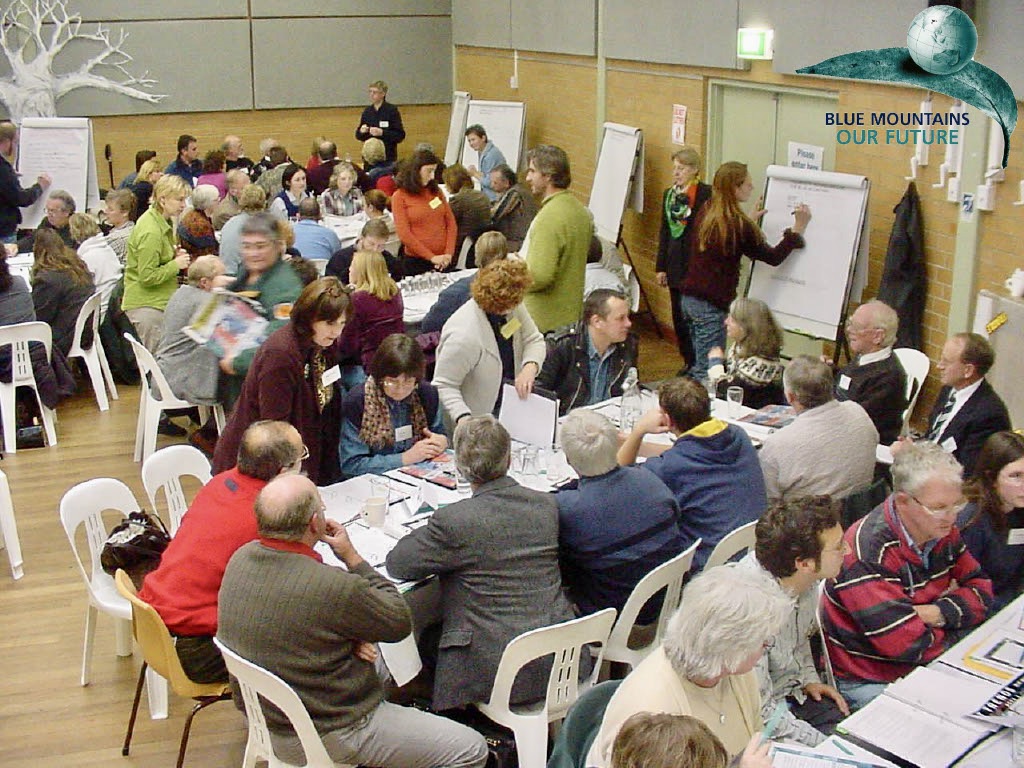
Council and community working together in 2000 to develop the vision for a more sustainable Blue Mountains with Planetary Health at its core.
“At the heart of the Blue Mountains Sustainability Model is a picture of planet earth. It’s there because when we did all this work with community, and when we reviewed what was happening across the whole world, we realised the connection between the health of people in our communities and having a healthy planet.
“The role of local government is absolutely key. Local governments are the level of government closest to the people and they manage local government areas, socially, economically and environmentally in an integrated way, hopefully.
“And, so what we’re trying to do is work with our communities to create systems in the local government areas that can be scaled and can grow exponentially. In some ways you could say to create a bottom-up revolution, because the world’s made up of local government areas.
We know we’ve got to do things differently and that includes also creating a compelling vision for a future that will give hope to our young people.Where we can be a beacon of light, a way forward, that perhaps is different to the current paradigm.”
We are Nature. A video about Blue Mountain City Council’s Planetary Health Initiative
So what is Planetary Health?
At its core, planetary health seeks to address the link between the wellbeing of human societies and the health of the natural systems that sustain life on Earth: recognising that they are an integrated whole. It acknowledges the interdependence of the environment and human health and advocates for a holistic approach to resolving global challenges.
Planetary health is an interdisciplinary field that examines how human-caused disruptions of Earth’s natural systems affect human health. It brings together environmental science, medicine, public health, public policy and social sciences alongside many other areas.
Unlike traditional environmental health, which focuses on how specific issues affect individuals, planetary health considers system-wide environmental changes and their broader health implications across populations. It recognises that when we damage our planet’s support systems through activities like deforestation, pollution of air, land and water, and the burning of fossil fuels, we ultimately harm ourselves.
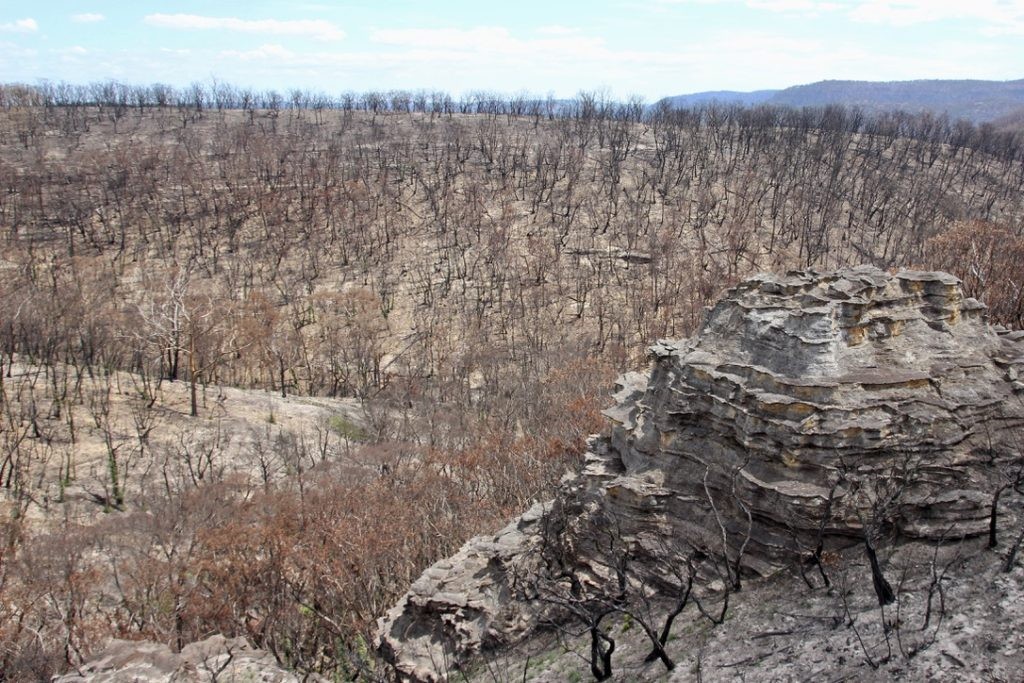
Severely burnt bushland near Bell in March 2020, two months after the Black Summer bushfires(Photo credit: Peter Smith).
Why is Planetary Health Important?
Our health is not isolated from the health of the planet. We rely on healthy ecosystems for clean air, fresh water, nutritious food, and a stable climate. Some of the key areas that planetary health looks at and seeks to positively impact include:
Climate Change and Health: Australia is experiencing the direct health impacts of climate change. Heatwaves are becoming more frequent and severe, leading to increased heatstroke and cardiovascular problems. Bushfire smoke exacerbates respiratory conditions, while floods and droughts disrupt food security and mental health.
Biodiversity Loss and Zoonotic Diseases: Australia’s unique biodiversity, including its iconic wildlife, is under threat, impacting ecosystem resilience and potentially increasing the risk of future pandemics. The destruction of natural habitats increases the risk of zoonotic diseases, such as COVID-19, jumping from animals to humans.
Pollution and Non-Communicable Diseases: Air, water, and soil pollution contribute to a range of non-communicable diseases, including asthma, cancer, and cardiovascular disease. Industrial activities, mining, and intensive agriculture are major sources of pollution in Australia.
Food Security and Nutrition: Climate change and land degradation are impacting agricultural productivity, threatening food security and nutrition. Pollinators are in decline, impacting food production and ecosystems that depend on them. Extreme weather events can destroy crops and livestock, while changes in rainfall patterns can lead to water shortages and crop failures.
Mental Health and Wellbeing: The experience of environmental disasters, such as bushfires, droughts, cyclones and floods, can have a profound impact on mental health. The loss of connection to nature, particularly for Indigenous communities with deep cultural ties to the land, can also contribute to mental distress.
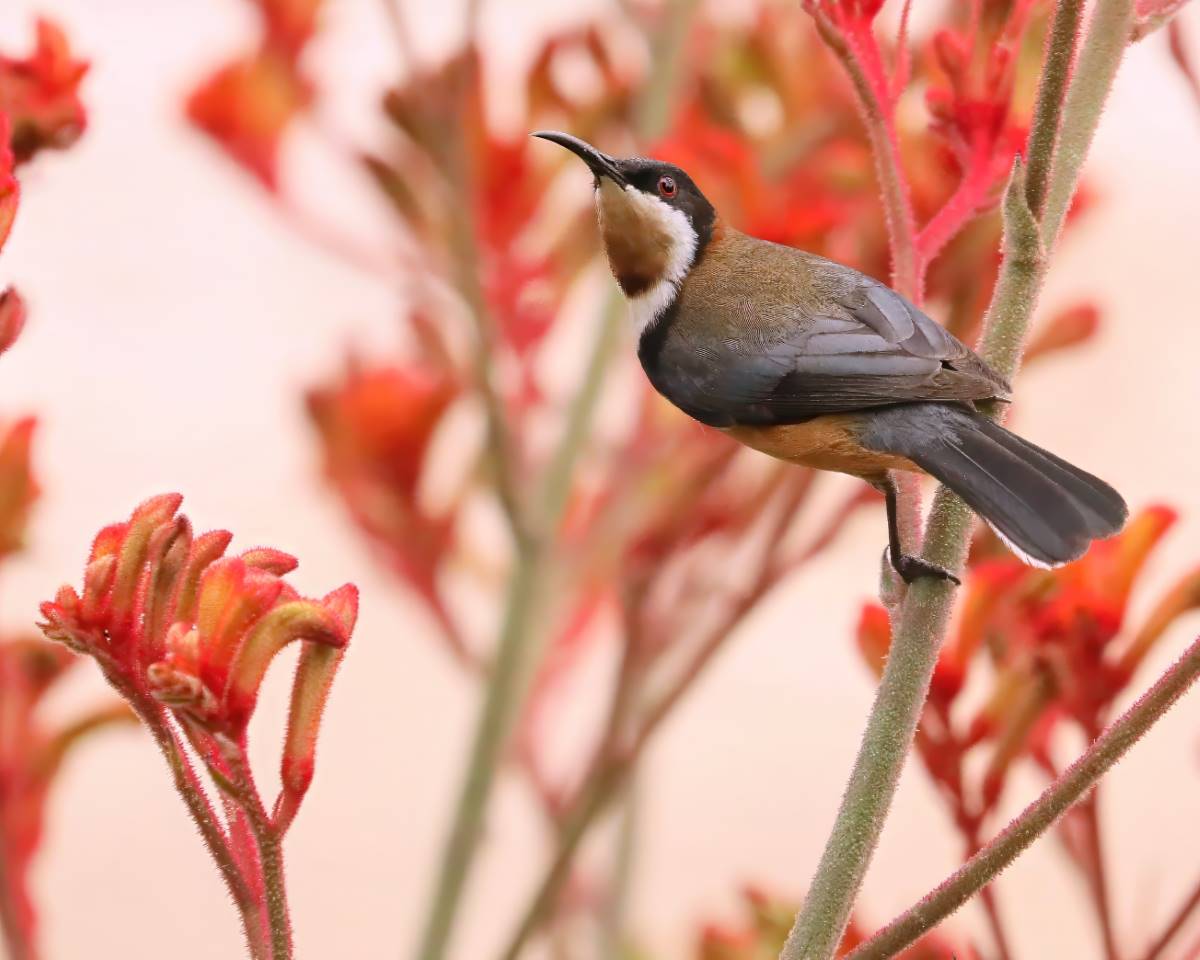
Eastern Spinebill. Photo Credit: Merryl Watkins
Key Components of Planetary Health
At the heart of the planetary health framework are several key components:
Sustainability: Adopting practices that do not deplete natural resources and ensure the long-term health of the Earth’s ecosystems.
Interdisciplinary Approach: Understanding that planetary health is not solely the domain of environmental scientists, but requires the input of health professionals, policymakers, economists, social scientists and more to tackle these complex, interconnected problems. Local communities and individuals are vital contributors at the local level.
Equity: Ensuring that the benefits of a healthy planet and sustainable practices are shared equitably across populations, particularly vulnerable communities who are disproportionately affected by environmental degradation.
Prevention and Resilience: Focusing on prevention through sustainable development and building resilience in communities to withstand environmental shocks.
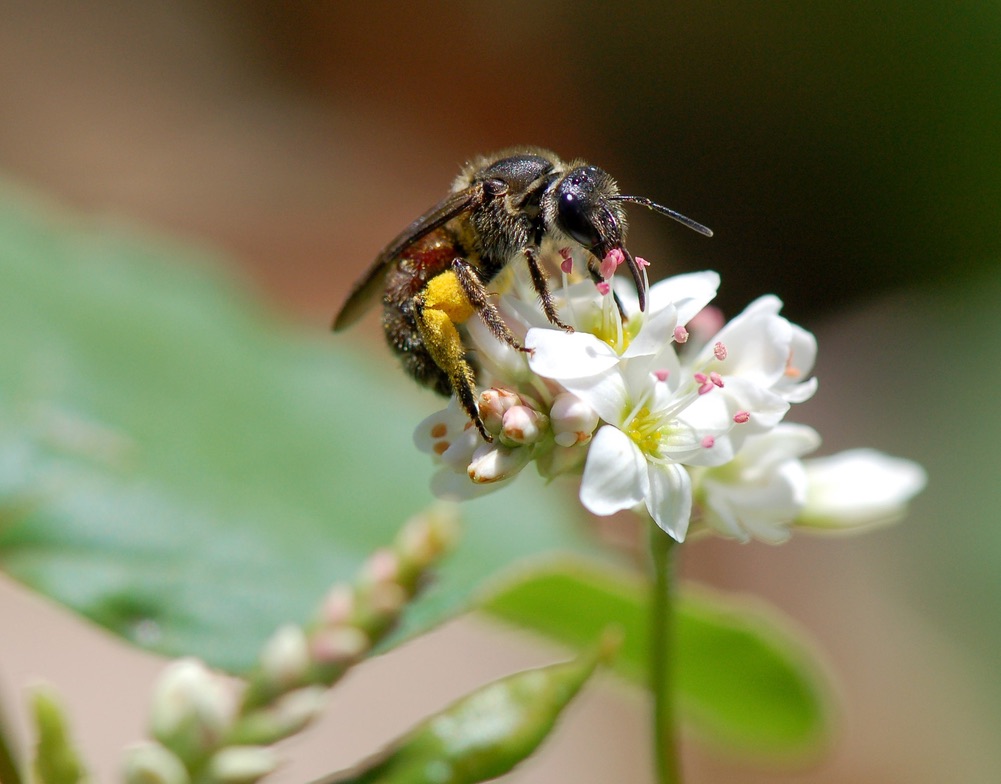
A Lasioglossum (Parasphecodes) native bee (Photo credit: Megan Halcroft)
Why Planetary Health Matters for Australia
Australia faces unique challenges. As the driest inhabited continent, Australia is particularly vulnerable to climate change impacts. Droughts, heatwaves, bushfires, floods and other extreme weather events such as cyclones have impacted the country for millennia but are occurring more frequently due to the changing climate.
The Great Barrier Reef, a world heritage site and crucial marine ecosystem, faces existential threats from warming oceans. Aquatic and land-based ecosystems are threatened by agriculture and aquaculture, deforestation and urban development. Biodiversity is declining; over 2000 species are listed as threatened and Australia has the fastest rate of mammal extinction in the world. Meanwhile, Australia’s agricultural systems face increasing drought frequency, threatening food security and rural livelihoods.
For Indigenous communities, who have sustainably managed Australia’s landscapes for over 65,000 years, planetary health disruptions represent not only physical health threats but also cultural ones. Traditional knowledge and connection to Country are integral to Indigenous wellbeing – connections that environmental degradation directly threatens.
A green turtle on the Great Barrier Reef. Photo credit: Erin Simmons
Planetary Health in Action Globally
In 2015, the Rockefeller Foundation-Lancet Commission on Planetary Health released its landmark report: “Safeguarding human health in the Anthropocene epoch”. Since then, the Planetary Health field has expanded rapidly to address the challenges identified in this report, with new academic journals, degree programs, courses, research institutes, and initiatives emerging at local, national and international levels.
The Lancet also produces a dedicated Planetary Health journal that publishes peer-reviewed papers by leading thinkers in the field alongside literature reviews and commentary.
Globally, the field’s core coordinating body is the Planetary Health Alliance, which unites over 480 organisations across 80+ countries to drive the growth of this transdisciplinary field with a focus on practical solutions.
The One Health approach to thinking about healthcare is another example of planetary health in action. This framework links the health of people, animals, and the environment and has been taken up globally, including in Australia where the Australian Centre for Disease Control has followed this approach.
This growing movement validates and supports Blue Mountains City Council’s approach over the last 25 years. Its Blue Mountains Planetary Health Initiative and Planetary Health Centre are driving local action to strengthen community well-being and resilience, restore natural systems, and foster hope in the face of climate change and increasing natural disasters.
The local news site you’re reading this article on is a core part of the strategy behind this initiative, informing and empowering local communities to take local action for restoring planetary health. The focus on solutions providing real hope is critical in the face of so much negativity in mainstream media.
Another positive Australian initiative is the Climate And Health Alliance (CAHA), the peak body on climate and health, using evidence-based advocacy to engage policymakers, professionals and the media.
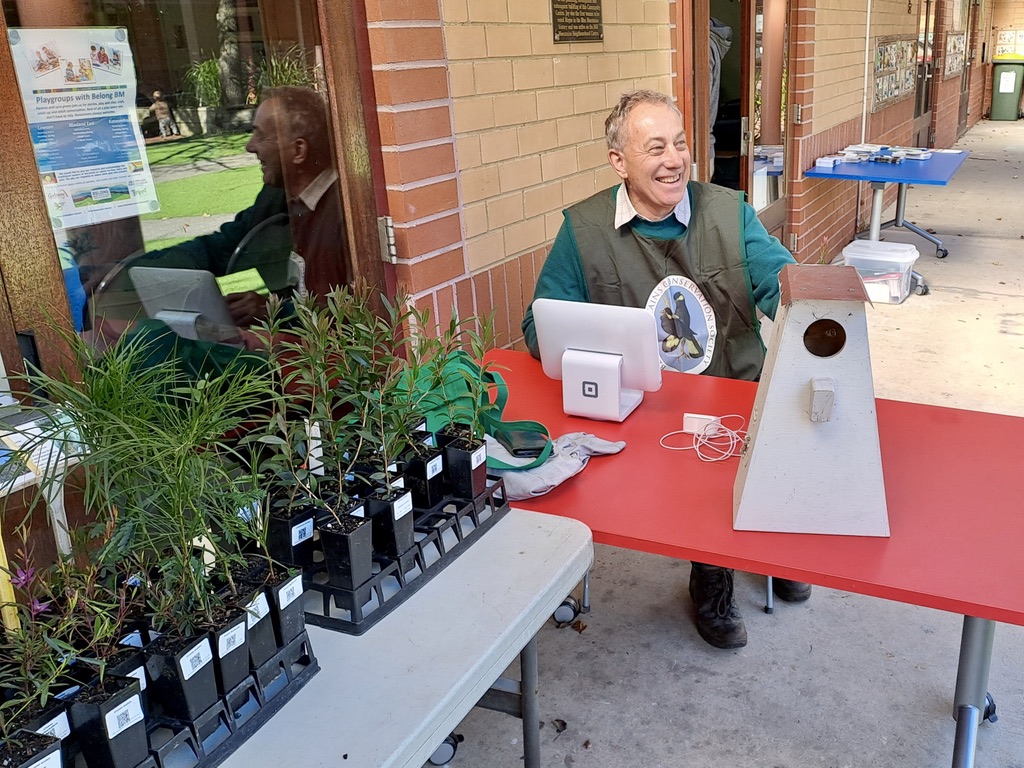
Andrew Solomon of the Blue Mountains Conservation Society selling native plants and nest boxes. (Photo credit: Belle Butler)
What Can You Do?
As the old saying goes, “think global, act local”. A great first step, if you haven’t already taken it, is to subscribe to the Blue Mountains Planetary Health newsletter, which gives you local news stories fortnightly, with actionable tips to help you make a difference locally, as well as invitations to workshops and events held at the Planetary Health Centre in Katoomba and beyond.
In and around your home the usual sustainable actions all add up, from switching to renewable energy to reducing, reusing and recycling wherever possible; growing your own food and eating locally-sourced food, planting natives, and avoiding pesticides and herbicides, especially near waterways.
We are just one week away from Plate to Planet: Blue Mountains Food Security Fair, taking place next Saturday, 10th October, at the Planetary Health Centre.
Whether you are interested in understanding the global food system, at-home food security, community resilience or local produce, we have talks, workshops, activities and stallholders for all.
View the full program and register your place via the website: https://events.humanitix.com/blue-mountains-2026-food-security-fair
We have limited spots remaining so don`t miss out!...
We are counting down the days to Plate to Planet: Blue Mountains Food Security Fair. Join us, and key speakers, educators and organisations at the Planetary Health Centre in Katoomba to explore one of the most important challenges of our time: how we grow, share and sustain food in a way that supports the health of ourselves, our communities and our planet. View the full program and reserve your space via this link: https://events.humanitix.com/blue-mountains-2026-food-security-fair...
Thank you to our food vendors catering Plate to Planet: Blue Mountains Food Security Fair 2026! 🌱
🍚 @eatsreallyyummy Eats Really Yummy is a food truck serving delicious Taiwanese-inspired fusion cuisine, bringing bold flavours and creative dishes to the Blue Mountains. Join them at Plate to Planet for a taste of their delicious street-food-style offerings while celebrating the diversity, creativity and community of our local food scene.
🌴 @kokomoislandcafe Based in Wentworth Falls, Kokomo Island Café is a female-owned food trailer bringing vibrant Caribbean flavours to the Blue Mountains. For the Blue Mountains Food Security Fair 2026, we’ll be serving a delicious menu of vegetarian snacks and dishes made with locally grown Blue Mountains produce, celebrating the region’s incredible growers. Join us for nourishing food, bold flavours, and a day dedicated to community, sustainability, and the remarkable food being grown in our region.
☕ @fidelity.coffee Fidelity curates a rotating selection of exceptional coffees from leading Australian and international roasters. From rare single-origins to innovative processing methods, every coffee is chosen for its unique character and outstanding quality.
🥐 @goodfatpastry Good Fat Pastry creates scrumptious plant based pastries for your enjoyment and donates proceeds to people in need. Do yourself good by eating tasty things. Do others good by supporting their needs.
To view the full program and register your place, visit the event website: https://events.humanitix.com/blue-mountains-2026-food-security-fair...
We’re excited to launch the 2026 program and website for PREPARE: Disaster Risk Awareness Expo, hosted by Blue Mountains Planetary Health.
Key event information: 📆Date: Saturday 7 November 🕙Time: 10am - 4pm 🌏Venue: Blue Mountains Planetary Health Centre, Katoomba 🪙Cost: Entry free, some sessions ticketed. Registration essential.
Visit the website and register your place here: https://events.humanitix.com/host/blue-mountains-planetary-health
Following the success of last year’s event, this year’s Expo will once again bring together the community, emergency services, researchers, local organisations and experts to share practical knowledge and explore how we can better prepare for disasters and build safer, healthier and more resilient communities.
The 2026 program includes a range of interactive workshops, talks and activities, including:
- iFire / UNSW - iFire Immersive Bushfire Simulation - Australian Red Cross - EmergencyRedi workshop - Resilient Blue Mountains - Climate Fresk - Blue Mountains City Council - Hidden hazards before a disaster - WIRES - caring for wildlife during disasters - Blue Mountains City Council - response and recovery after the 2019 / 2020 Black Summer Bushfires
Key emergency services – NSW Rural Fire Service, NSW State Emergency Service and Fire and Rescue will also be on site with vehicles, displays and activities.
Rapid Relief Australia will be providing free food and refreshments throughout the day.
Visit the website and register your place here: https://events.humanitix.com/host/blue-mountains-planetary-health
We’re looking forward to seeing you and your families there!...
Looking for a fun, educational and sustainable day out these school holidays?
Come along to Plate to Planet: Blue Mountains Food Security Fair in Katoomba on Saturday 10 October, with a line-up of free talks, activities and entertainment for all ages!
🌿 The Importance of Bioregions in Uncertain Times Join permaculture pioneer Rowe Morrow to explore how our land, water, food, energy and communities are connected - and how we can build a more resilient Blue Mountains.
🌱 Discover Old Man Saltbush Get up close to this remarkable native plant with Anne Elliot, and discover its potential as part of a more diverse and resilient food system.
🪱 Have a go at worm farming Learn how easy it can be to turn food scraps into valuable nutrients for your garden - with a hands-on worm farm activity from BMCC.
🎶 Enjoy live music Take a break, relax and soak up the atmosphere while enjoying live music by Olivia Dustmann throughout the day.
🎨 Kids` Corner - all day! Rock painting, crafts and story time, with plenty of fruit and veggie-inspired fun for younger visitors.
Explore local stalls, food, gardens, wildlife, sustainability and practical ideas for creating a more resilient food future.
Entry to the Fair and markets is free, with a range of free and paid sessions and workshops available throughout the day. Some sessions have limited capacity, so registration is recommended.
View the full program and register your place here: https://events.humanitix.com/blue-mountains-2026-food-security-fair
📅 Saturday 10 October | 9am–4pm 📍 Blue Mountains Planetary Health Centre, Katoomba...
Join Andris Heks, Yogic Psychotherapist, winner Best Actor, Blue Mountains, for his workshop to laugh as you never laughed before, as part of a movement to globalise people-bonding cheerfulness through kookaburra laughter contagion as an antidote to distressing world divisiveness.
Purchase your ticket here: https://events.humanitix.com/kookaburra-laughter-workshop
View the trailer and the GoFundMe page here: https://www.gofundme.com/f/globalise-unconditional-love-through-kookaburra-laughter
Key event information: - When? 10:15AM - 2:30PM, Sunday 4 October 2026 (1st day of Daylight Saving - 1 hour forward) - Where? Blue Mountains Planetary Health Centre, 33-39 Acacia St, Katoomba, NSW, 2780 - Fee? $60 or what you can afford - Note: please bring your own lunch
What to expect: - Learn how to stay cheerful for good - Learning the funny, human emulated, communal kookaburra laughter and meditation - How communal kookaburra laughter promotes bonding even amongst strangers - The awesome native treasure of the laughing kookaburra phenomenon - Why Kookaburra Yoga is the ‘most excellent of Yogas` - How communal kookaburra laughter contagion boosts the subtle and gross national product - How you could contribute to the kookaburra laughter contagion
This event is supported by Blue Mountains Planetary Health.
Purchase your ticket here: https://events.humanitix.com/kookaburra-laughter-workshop...
Come along to the Planetary Health Centre this Saturday for the next Skill Share Saturdays event!
This weekend`s agenda:
8:30AM - 10AM | Learn how to use your sewing machine class with Sherlie McMillan
8:30AM | Planetary Health Cafe open, serving Good Fat Pastry and Whisk and Pin
9AM - 10AM | Tai Chi and Qigong class with Virginia Field
10AM - 12PM | Learn how to grow WITH the Upper Blue Mountain permaculture workshop with Leni from Alchemy Farms
10AM - 3PM | Fashion Upcycling Workshop with Sherlie McMillan
10:30AM - 12PM | Learn to make focaccia from scratch with Laura Zucchetti (no experience needed)
1:30PM - 4:30PM | Planetary Health Bushcare with Karen Hising
For more information and to purchase a ticket, please visit the website: https://events.humanitix.com/skill-share-saturdays-at-the-planetary-health-centre...
Plate to Planet: Blue Mountains Food Security Fair 2026
📣HEADLINE SPEAKER📣
Our headline speaker is Julian Cribb AM – a renowned Australian science writer, journalist and author who has spent more than 50 years communicating science, agriculture, climate and global sustainability issues. He is the author of several influential books, including The Coming Famine (2010), Food or War (2019) and How to Fix a Broken Planet (2023), which explore the future of food systems, planetary health and humanity`s long-term survival.
He is widely recognised as one of Australia`s leading voices on global food security and sustainable development.
To register for his talk, and view the rest of the program, visit the website: https://events.humanitix.com/blue-mountains-2026-food-security-fair...
At our next Skill Share Saturdays event on Saturday 5th September, join Laura Zucchetti at 10:30am to learn how to make focaccia from scratch!
Come along for a 90 min class where you`ll mix, rest and stretch your own focaccia dough from start to finish, guided every step of the way. You’ll take home your dough to bake on the day in your own oven.
Sign up to this session, and view the other offerings on the day via this link: https://events.humanitix.com/skill-share-saturdays-at-the-planetary-health-centre...
Plate to Planet: Blue Mountains Food Security Fair 2026
We are pleased to announce that the program and registration for Plate to Planet: Blue Mountains Food Security Fair 2026 is now live!
Follow this link to view the program and register your place: https://events.humanitix.com/blue-mountains-2026-food-security-fair
Key information:
When? Saturday 10 October, 9AM - 4PM
Where? Blue Mountains Planetary Health Centre, Katoomba
Who is it for? Families, gardeners, enthusiasts, community groups and businesses, anyone looking to learn about how to be more resilient through local and sustainable food systems.
What to expect? Talks, workshops, demos, market stalls, family activities, music, food
Is there a cost? Entry to the Fair and Markets is free. Talks and workshops are ticketed (both free and paid) and have limited capacity, so please register in advance.
Program highlights:
🌏Headline talk: The age of renewable Food – Julian Cribb AM 🎋Wild edibles foraging workshops – Diego Bonetto, Eat More Weeds 🏞️The importance of bioregions in uncertain times – Rowe Morrow, Permaculture Matters 🥒Home canning and food preservation workshop – Kirsty Berté, Permaculture Hawkesbury Valley 🏡Designing your own Permaculture Property – Leni Nyssen, Alchemy Farms 🍃Utilising what’s in front of you – Uncle Lex, The Ganya Shed 🪱How to worm farm - BMCC 🎸Live music by Olivia Dustmann 🌾Community crop and seed swap
Tickets are limited so please register your place now: https://events.humanitix.com/blue-mountains-2026-food-security-fair
We are also seeking stallholders for the event. If you are a grower, retailer, community organisation or business that would like to get involved, please reach out to [email protected]!...
Thank you to everyone that joined us at the Planetary Health Centre on Saturday for the first of our Skill Share Saturdays program!
The Centre was a hive of activity all day, and we heard from @alchemyfarms_permaculture, the @ediblegardentrailbluemountains team and Andy Mann. Also thanks to Sherlie McMillan from Greater Blue Mountains Rotary for teaching the Fashion Upcycling workshop, and Virginia Field for the Tai Chi and Qigong class.
The next event will be held on Saturday 1st August - you can register your place here: https://events.humanitix.com/skill-share-saturdays-at-the-planetary-health-centre
🖐Get involved!
Do you have a skill, program or interest that promotes planetary health that you`d be willing to share with members of the local community? We are looking for more workshop and session hosts for our future events.
“Every body can help the planet” is the tagline of Earthly Remains, a not-for-profit organisation set up to advocate for human composting as a more sustainable death care option in Australia.