Planetary Health NewsStrengthening community and restoring the health of our planet.
Picking Up the Pieces: How a Small Group in Katoomba is Tackling Planetary Health
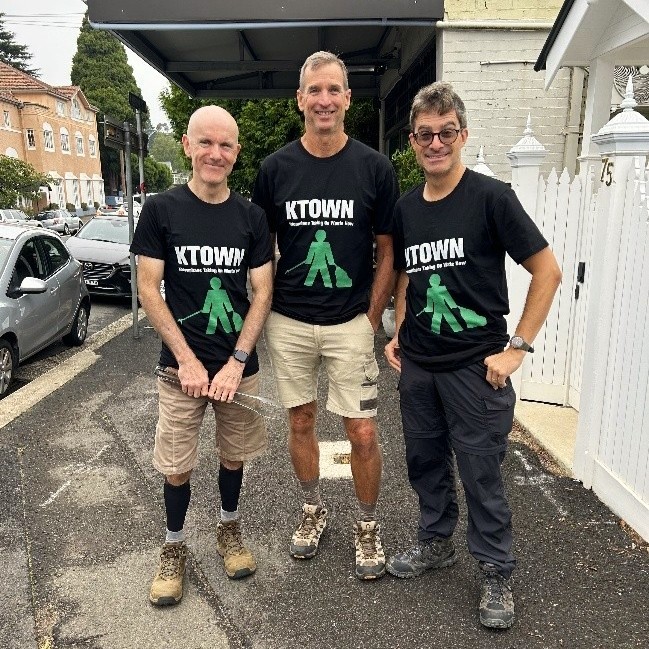
KTOWN’ers (L-R) Simon, Don & Adam, outside ‘the office’ Cassiopeia
In Katoomba, a grassroots litter-picking group tackles rubbish before it reaches our water supply. Their story shows how local environmental action, fueled by community connection, can drive meaningful change.
Key Points:
One man’s simple decision to pick up litter in Katoomba grew into a small community group, demonstrating how individual actions can spark broader movements.
The group observed that the NSW container deposit scheme reduced bottle and can litter by almost 50%, showing that the right incentives can effectively change people’s disposal habits.
The Katoomba group exemplifies how local communities can take ownership of environmental challenges, with their work protecting both local ecosystems and broader water systems while building social connections.
On a wet afternoon in the Blue Mountains, rainwater surges down Katoomba’s streets, carrying scraps of plastic, takeaway cups, and stray fragments of paper. Left unchecked, the torrent would sweep through Katoomba Falls, down the Jamison Valley, and ultimately into Warragamba Dam—Sydney’s main water supply.
But on this day, the flood of waste is interrupted by a small act of care. A man in a “KTOWN” shirt crouches by the curb, pulling rubbish from the gutter with a pair of barbecue tongs. What he collects may seem insignificant—half a bag of plastic, a handful of cans—but each piece is one less hazard for wildlife, one less pollutant in the water system.
This is Katoomba’s ‘KTOWN’ litter-picking group – Katoombans Taking On Waste Now – a small, grassroots effort with an outsized impact.
A personal journey
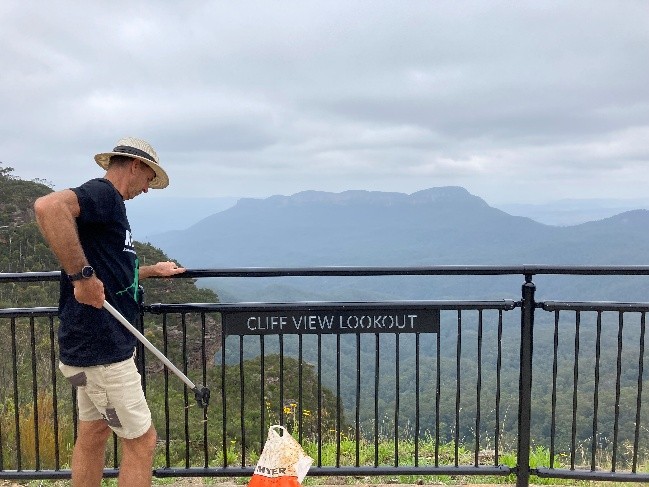
Lookout litter spoiling the view
The group’s origins are humble. Simon Day, a long-time bushwalker and Bushcare volunteer, moved to Katoomba in 2019, drawn by the pristine escarpments and World Heritage wilderness.
“I thought the litter problem would be less here than in Sydney,” he admits. “But it turns out rubbish is a universal phenomenon.”
His solution was simple: pick it up. With nothing more than a reusable bag and a pair of gloves, he began clearing litter from local tracks and streets. Soon after, fellow resident Don noticed him while walking his dog and struck up a conversation. Over a coffee with Don, Adam joined, and the Katoomba litter-picking group was born.
“It shows how one small action can spark a movement,” he says.
The practice of picking
The group’s “tool kit” is hardly high-tech—bags, gloves, and $10 grabbers from the hardware store. But the rewards are immediate.
“After just half an hour, you look down at the bag and realise how much has been stopped from going into the creek,” Simon reflects. “It’s a small effort, but it makes a big difference.”
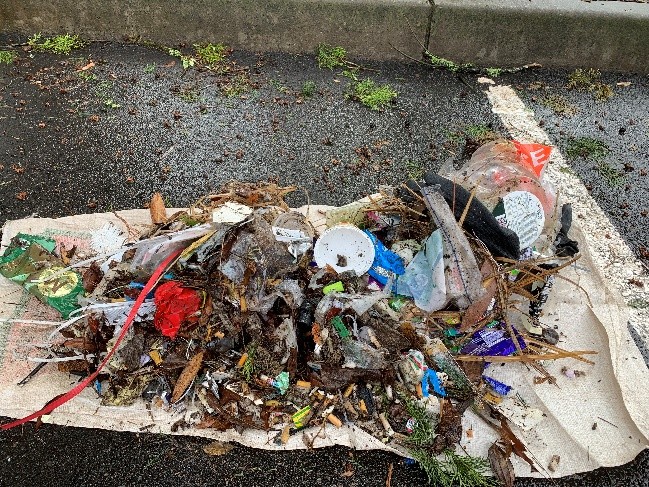
Litter collected near the Hydro Majestic Hotel in Medlow Bath
Their work focuses on “hot spots”: the heavily trafficked escarpment walks near Scenic World and Echo Point, rest areas along the highway, and picnic grounds such as Maple Grove, where rubbish piles up alarmingly fast.
The practice isn’t just about beautification. It’s about prevention. Each piece removed before the next rainstorm means fewer pollutants in creeks, valleys, and ultimately in Sydney’s drinking water.
Camaraderie and coffee
While the picking itself is important, the group has also discovered the quiet joy of camaraderie. They often meet at Cassiopeia Café in Katoomba, a cosy local spot where maps are spread out and decisions made about which “hot spots” to tackle that day. After a session of litter-picking, the group reconvenes at the café to debrief, swap stories, and share the small triumphs of the morning.
“It gives us a sense of belonging,” says Simon. “You’re not just cleaning up—you’re part of a little community that cares about this place.”
In that ritual of coffee, conversation, and connection, the work becomes more than environmental action. It becomes a social bond that sustains the effort.
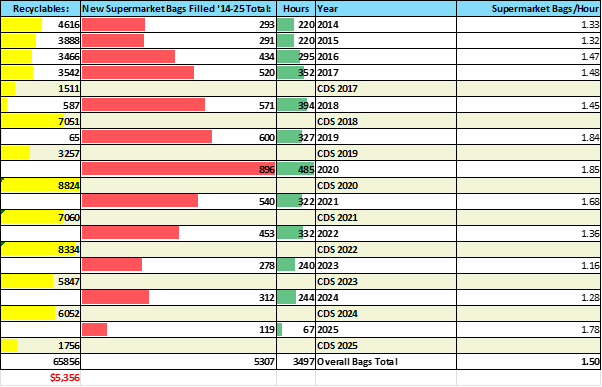
Simon’s ‘litter diary’. Note the $5,356 made from recycling drink containers through the Return and Earn scheme since 2014
“The frustrating part is that so much of this is preventable,” says Simon. “It’s not just about the plastic itself. It’s about behaviour—someone had it in their hand, and they let it go.”
The group documents what they see, submitting photos and reports through the Council’s customer service system.
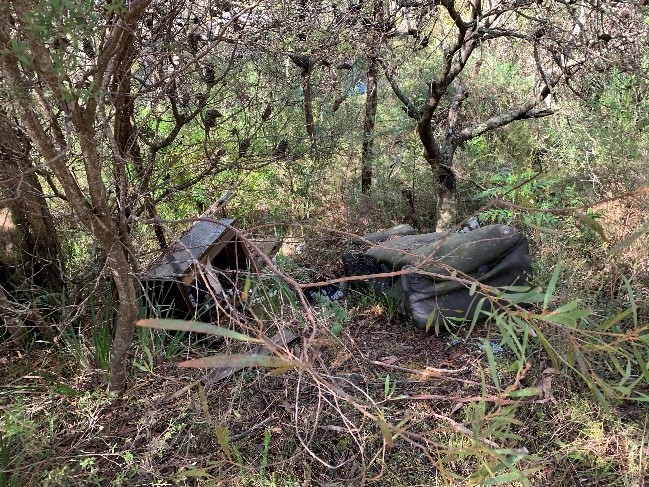
A dumped couch and TV, reported to Council for removal
Changing behaviour
The pickers are clear: real change will only come from shifting behaviour. And small incentives can help.
Since the introduction of the NSW container deposit scheme, they’ve observed almost a 50% reduction in bottles and cans littering local streets. “As soon as there was a monetary value attached, people stopped throwing them away. That shows what’s possible.”
But the group also believes in leading by example. Wearing their “K-Town” shirts while they work often sparks conversations with locals and visitors alike.
“People come up to us and say, ‘That’s a great idea,’” Simon explains. “It raises awareness just by being visible.”
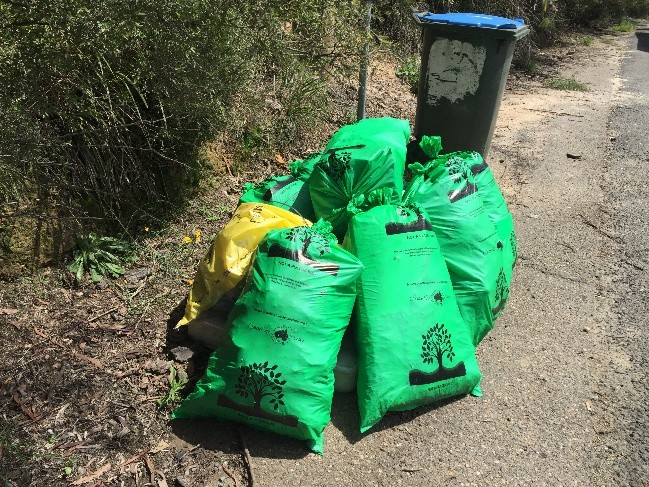
Bags of litter collected at a highway rest area in Katoomba
Beyond blame
It’s tempting to blame tourists for litter in the Blue Mountains, but the group’s experience suggests otherwise.
“Locals are just as responsible,” one says. “You see homeowners who don’t clear the gutter outside their house, or businesses who ignore the rubbish on their footpath. If we want visitors to respect this landscape, we have to show that we respect it ourselves.”
This ethos links directly to planetary health, the emerging field that connects human wellbeing with the health of natural systems. By keeping streets and creeks clean, the group isn’t just protecting wildlife—they’re safeguarding water quality, reducing plastic pollution, and fostering community pride.
Grassroots action for planetary health
Globally, efforts to tackle plastic pollution often stall at the policy level. The recent international plastics summit ended without consensus, despite the urgency of the problem. But grassroots action tells a different story.
“Rather than waiting for a top-down solution, we have to do something ourselves,” says Simon. “Change has to come from the ground up.”
This philosophy is echoed by planetary health advocates worldwide: local actions can scale into systemic change. Councils are the closest level of government to communities, and when residents and local authorities collaborate, they can build momentum that eventually reaches higher levels of governance.
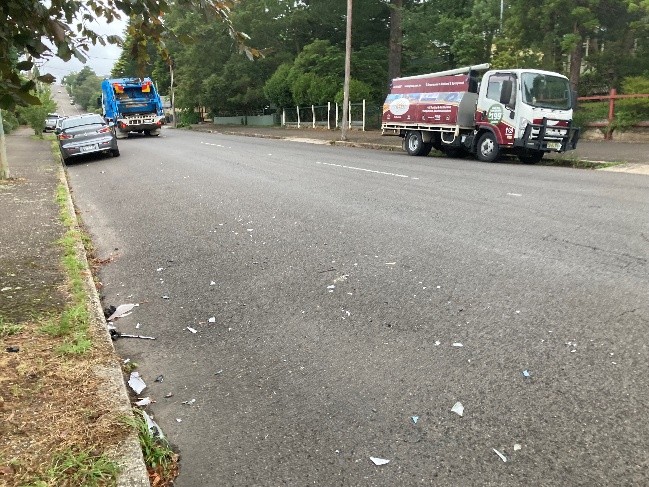
Vehicle crash debris on Katoomba Street, headed for our waterways
A fragile hope
The work is never finished. Within a week of clearing a site, new rubbish appears. But persistence is part of the point.
“It’s easy to imagine a dystopian future, like the film WALL·E, where we drown in our own waste,” says Simon. “But it’s just as possible to imagine a future where communities take ownership of their environment. Where every creek, every street, is valued as part of a living system.”
In Katoomba, that future is already taking shape—one bag of rubbish at a time, often with a cup of coffee waiting at Cassiopeia afterwards.
Planetary health, piece by piece
The litter-pickers of Katoomba don’t see themselves as heroes. They see themselves as neighbours, custodians, and ordinary people doing what needs to be done.
But in their persistence lies a profound lesson for planetary health: global challenges can be tackled from the ground up. Each act of care ripples outward—into the waterways, into the community, into the wider world.
The story of Katoomba’s litter-picking group is not about perfection. It is about participation. And it reminds us that protecting the planet doesn’t always start in parliaments or at summits. Sometimes, it starts with a pair of tongs, a reusable bag, and the decision to bend down and pick something up.
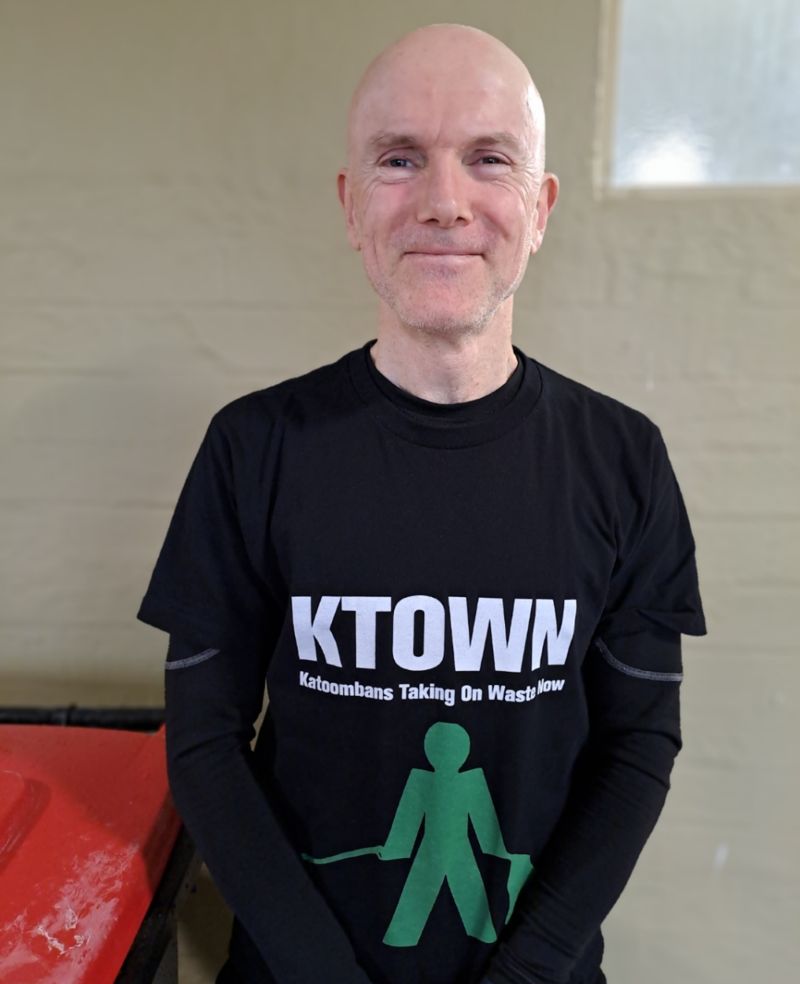
Simon Day, anti-litter hero and founder of KTOWN
Start your own litter picking group:
Start small – All you need is a bag, gloves, and a pair of tongs or grabbers. Even 30 minutes of collecting makes a difference.
Pick a patch – Focus on local “hot spots” where rubbish gathers—creeks, parks, rest areas, or streets with heavy foot traffic.
Be visible – Wear a simple shirt or badge so people know what you’re doing. Visibility sparks conversations and inspires others. Check out Katoomba T-Shirts who make custom designs.
Meet regularly – Choose a café or community spot to gather before and after picking. Sharing the experience builds camaraderie and keeps motivation high.
Record and report – Take photos, track what you collect, and report bigger issues (broken bins, unsafe sites) to your local council.
Celebrate the wins – Every bag of rubbish removed is a small victory—for your community, your waterways, and planetary health.
Experience the joy and sense of purpose that connecting to community, nature, and your own creativity can provide this weekend at the Planetary Health Wellness Weekend. There will be delicious food and coffee, music, art, workshops, nature walks, talks, an Interfaith Gathering and the following stalls:
Food vendor: @8thingskatoomba Zensational Coffee Cart @blue_mts_conservation_society Blue Mountains Wildplant Rescue Blue Mountains Women`s Health & Resource Centre (BMWHRC) Greater Blue Mountains Rotary @permaculturematters Acoustic Ecologist and author of ‘Deep Listening to Nature’, Andrew Skeoch @lacebrookstitchery Sustainable death care BMCC Sustainability and Waste team BMCC Bushcare team View the full program and reserve your spot for a range of activities here (link in profile): https://bit.ly/4kUkzfm
Are humans the only species capable of grief? While grief is often treated as a uniquely human experience, any animal capable of forming attachments also has the capacity to grieve. Join Teya Brooks Pribac, author of ‘Animal Grief and Spirituality: Cross-Species Perspectives’ at the Planetary Health Wellness Weekend on Sat 28 Feb, as she reviews key theoretical foundations of cross-species grief. The flip side of deeply caring for animals is the grief we also feel when we lose them - beloved companion animals, wildlife, or animals harmed by human activity. By validating both nonhuman animal grief and human grief for other animals, this presentation invites a more compassionate and inclusive understanding of loss. Reserve your spot here (link in profile for Wellness Weekend): https://bit.ly/4kUkzfm
Would you like to help those around you who may be struggling with their mental health? Come along to the Planetary Health Wellness Weekend on Sat 28 Feb for an Introduction to Mental Health First Aid. Rotarian Ian Scott will define mental health, talk briefly about the most common mental health issues in Australia, and cover the basics of recognising when someone is experiencing a mental health issue or problem. He`ll outline what is covered in a full Mental Health First Aid course. We are planning to deliver a course later this year so it`s a great opportunity to learn more. Reserve your spot here (Link in profile for PH Wellness Weekend): https://bit.ly/4kUkzfm
At our Planetary Health Wellness Weekend on Sat 28 Feb, Christopher Smith and Juan Roberson, Shared Reading facilitators, will introduce how the reading and discussion of great short stories and poetry can change lives and strengthen social connection, compassion, and empathy. Shared Reading, or social bibliotherapy, for all ages, is one of the most inspiring and magical ways of dealing with loneliness and the struggles of the human condition. "Shared reading makes the process of revealing who you are to other people safer." Learn how groups can be run in-person and online. Reserve your spot here (Wellness Weekend link in profile): https://bit.ly/4kUkzfm
You can view Christopher Smith`s TED Talk here: https://www.youtube.com/watch? v=dAxk61E0R88
It`s just under a week until the Blue Mountains Interfaith Gathering on Sun 1 March, starting with a smoking ceremony by Chris Tobin at 2pm. It`s the culmination of the Planetary Health Wellness Weekend which is looking at physical, emotional, mental and spiritual health. Afternoon tea will be provided. Reserve your spot here (link in profile under Wellness Weekend): https://events.humanitix.com/planetary-health-wellness-weekend
Join Harumi Hayakawa for an introduction to ikebana, the Japanese art of flower arranging at the Planetary Health Wellness Weekend on Saturday 28 February. You’ll get hands-on practice creating an arrangement and learn about the history and philosophy of ikebana, and how this calm, meditative practice uses flowers as a gentle and creative form of therapy. Reserve your spot here (link in profile): https://events.humanitix.com/planetary-health-wellness-weekend
Learn how to incorporate meditation and Mindfulness-Based Stress Reduction into your life at our Planetary Health Wellness Weekend on Sat 28 Feb. Experience a short interactive mindfulness activity led by Betty Ramsay, physio and health coach at The University of Sydney. She has years of experience working with people who are living with life stresses including caring roles, work demands, pain, chronic illness, depression, and anxiety. Reserve your spot for this inspiring and free event here (link in profile): https://events.humanitix.com/planetary-health-wellness-weekend
Thought about doing yoga but never tried it? Join Sheila Annis from Mountain Mist Yoga in Woodford to experience how this rich and vast practice can lead you on a path to better health, and can even be practised from a chair! Reserve your spot for the Chair Yoga session on Sat 28 Feb at the Planetary Health Wellness Weekend in Katoomba here (link in profile): https://events.humanitix.com/planetary-health-wellness-weekend
Learn more about Mountain Mist Yoga here: https://mountainmistyoga.com/
Join multi-award-winning photographer Sue Lightfoot at the Planetary Health Wellness weekend on Sat 28 Feb as she shares how taking up photography to manage her mental health after PTSD has opened up a life filled with creativity, compassion and consciousness. Living a creative life has expanded to include creating permaculture gardens from recycled materials and finding multiple ways to give back to the community. Through creativity she has learnt "to see and feel the world, to live with awe and wonder, to change lenses, shift [her] focus and embrace all forms of light … to enjoy nature and mother earth and accept we are all connected.” She’s been inspired by Miksang, Tibetan for “good eye”, which is a form of contemplative photography that is about seeing and photographing the world exactly as it is, rather than how we want it to be, focusing on colour, light, texture, and pattern. Her session is free but reserve your place here (link in profile): https://events.humanitix.com/planetary-health-wellness-weekend
Learn more about Sue and her work here: www.suelightfoot.com
We are Nature, and the more intimately we connect with the living world around us, the more alive we are. Hone your observations and connect more deeply in an inspiring nature journalling workshop led by Anna Barnes from @ArtFoodCultureNature on Saturday 28 February at the Planetary Health Wellness Weekend. Bookings essential here (link in profile): https://events.humanitix.com/planetary-health-wellness-weekend
“When we see with clear eyes, we know that we are surrounded by beauty. Let yourself fall in love with your life by paying attention”. John Muir Laws
How can we engage our hearing to connect more deeply to nature around us? Join us at the Planetary Health Wellness Weekend on 28 February and 1st March to hear from one of the most inspiring and engaging presenters we’ve ever had at the Planetary Health Centre. Author and acoustic ecologist Andrew Skeoch will guide us into hearing the languages of nature. Learn how we can develop our auditory awareness, identify species by ear, recognise behaviours and repertoire, and find empathy with the voices of other beings. Andrew’s presentations are an immersive weaving of evocative recordings, fascinating spectrogram analysis and original ideas. You’ll hear the natural environment around you in a whole new way. Each morning at the Wellness Weekend Andrew will also lead Deep Listening Immersive Field Workshops demonstrating how to increase your sensitive auditory perceptions of the extraordinary natural world around us. Tickets available here (link in profile): https://events.humanitix.com/planetary-health-wellness-weekend
This event has been made possible because of the generous support of Greater Blue Mountains Rotary and the Katoomba and Upper Blue Mountains Bendigo Community Bank.
We are looking forward to this (Em)power(ing) tools presentation being delivered by Robyn Catchlove, Sherlie McMillan, Suzie van Opdorp and Teja Brooks Pribac at our Planetary Health Day on Sat 28 Feb. It`s free but you need to register to attend here (link in profile): https://events.humanitix.com/planetary-health-wellness-weekend
This interactive presentation explores an unexpected but deeply empowering practice: using power tools. With the help of co-presenters and their favourite tools, the session demystifies DIY and shows how accessible practical skills really are. Beyond the satisfaction of building and repairing, working with power tools fosters confidence, patience, and problem-solving skills. It can also be financially empowering, reducing dependence on paid labour, and reinforces the belief that challenges—practical and personal alike—can be worked through with focus, persistence, and curiosity. This session invites participants to reconsider what empowerment can look like, and how hands-on making can translate into resilience in everyday life.
It`s one of many events during our Planetary Health Wellness Weekend at the Planetary Health Centre in Katoomba on 28 Feb and 1 March and has been organised in collaboration with Rotarians 4 Planetary Health and Greater Blue Mountains Rotary
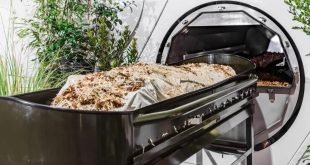
“Every body can help the planet” is the tagline of Earthly Remains, a not-for-profit organisation set up to advocate for human composting as a more sustainable death care option in Australia.