Planetary Health NewsStrengthening community and restoring the health of our planet.
From frog saunas to butterfly puddles: 8 ways to turn your homes into a wildlife refuge
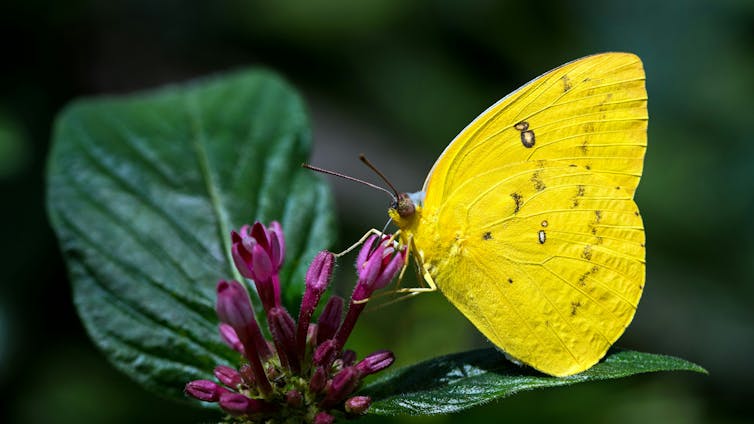
Urban butterflies are declining at alarming rates around the world (Photo: David Clode / Unsplash)
By Bethany Kiss, Mark Jacques and Sarah Bekessy – RMIT University
Native animals can make excellent neighbours. Blue banded bees pollinate our vegetable gardens. Microbats eat up to 1,200 mosquitoes a night and powerful owls keep rodents at bay. But could we go one step further, and change our homes to invite native animals in as housemates?
Cities are biodiversity hotspots and have an important role in tackling the extinction crises for animals, plants and insects. As cities continue to sprawl, our buildings have become increasingly important habitat for wildlife.
Animals are not the only ones to benefit. Evidence shows noticing wildlife at home can lead to better mental health. Co-habitating with wildlife can also help you feel more at home.
But how can we intentionally design our homes to co-inhabit with wildlife? That’s the question explored by When Wildlife Moves In, a new work at the National Gallery of Victoria. The work, created by the authors of this article, uses data from Wildlife Victoria to explore how homes can become shared ecological resources.
Here are eight easy ways to invite wildlife into your home and backyard.
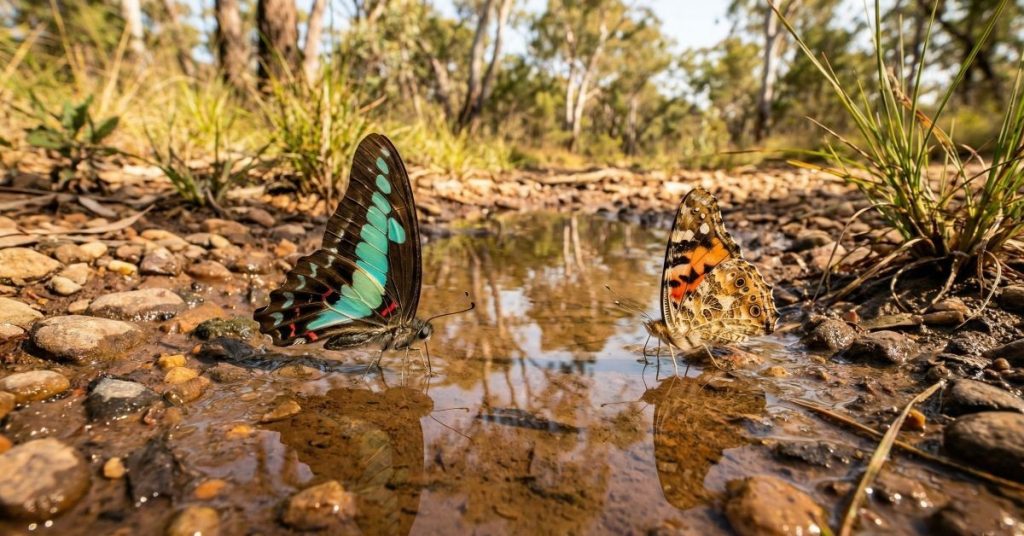
Butterflies, for example, like to sip water from shallow water sources because they tend to get stuck in deeper water.
Solution?Leave an area of gravel beneath your air conditioner vent to create a “puddling” station for butterflies. This will transform what would otherwise go down our drains into habitat for a beloved pollinator.
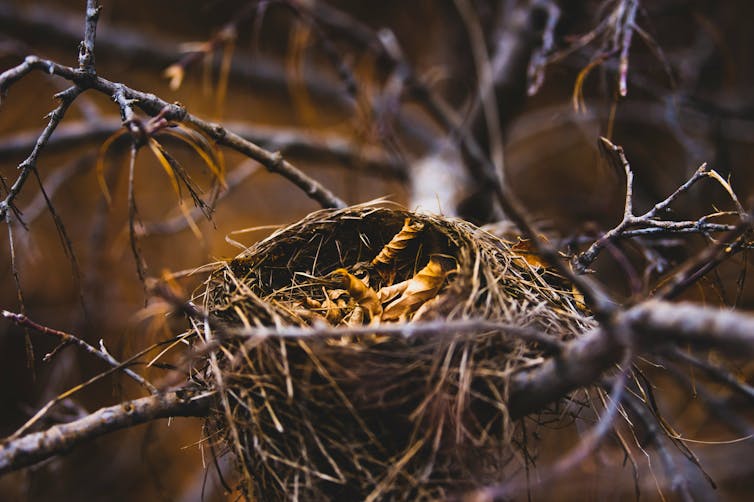
2. Provide city birds with scarce nesting material
Leave natural materials such as twigs in your backyard for bird nests. (Photo credit: Jon Sailer/Unsplash)
Glass doors and windows are a serious threat to birds. (Photo by Laura Lauch / Unsplash)
In the United States alone, as many as a billion birds each year are killed or badly injured flying into glass.
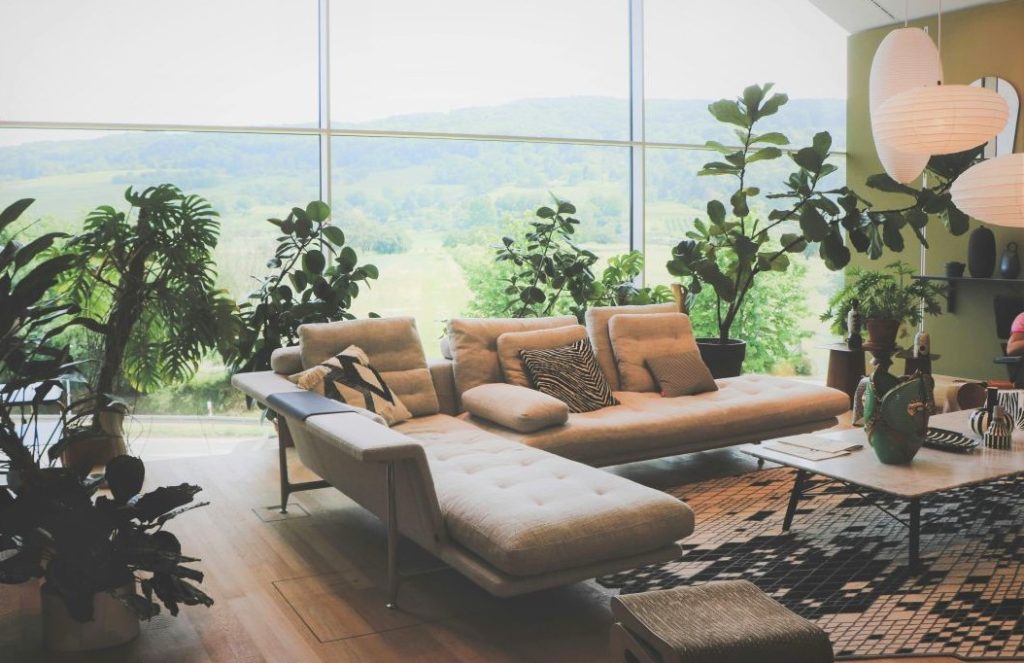
Solution? Move indoor plants out of view through windows and doors so birds don’t mistake them for habitat. Or put anti-collision stickers on your windows, ensuring they are high contrast in colour and spaced no more than 5–10 cm apart.
4. Remove the concrete from your backyard
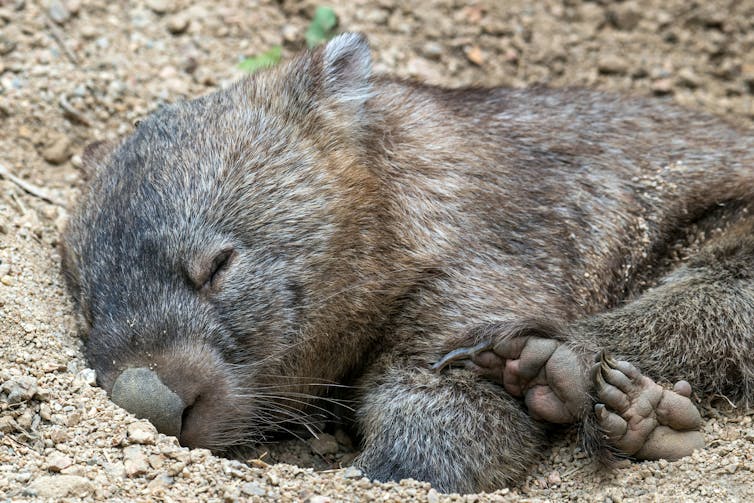
Wombats will make burrows under verandahs and homes. (Photo: David Clode/Unsplash)
Concrete slabs destroy soil microorganisms and prevent animals from digging and tunnelling to create nesting sites.
Wombats are ecosystem engineers. Their burrowing aerates soil, improves water infiltration and cycles organic material and nutrients. But urban development fragments their habitat and concrete foundations seal off natural soil ecosystems. When this happens, wombats adapt by creating alternative burrow systems under houses, decks and other human structures.
Solution? Remove the concrete slabs from your backyard and leave open soil with vegetation or a raised deck in its place.
5. Leave the cavities in your houses unsealed
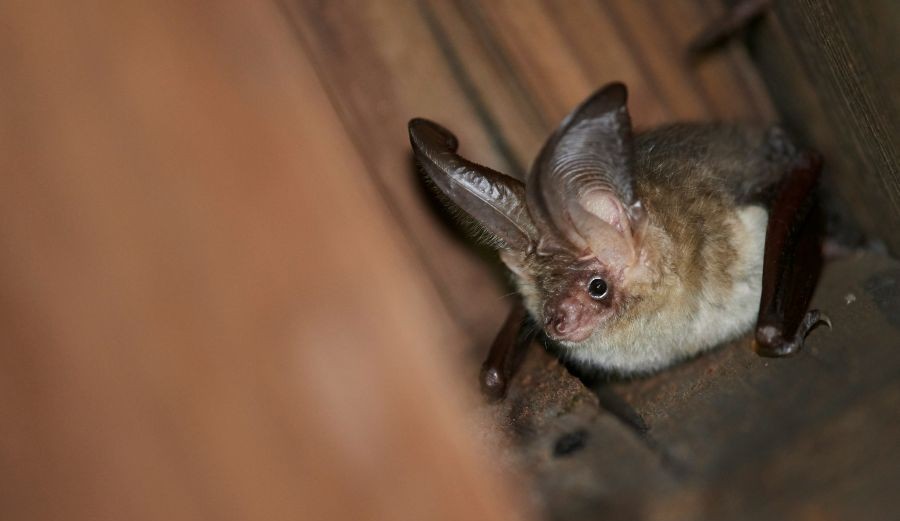
A microbat happily ensconsed in a safe crevice in a roof cavity (Photo: Nils Bouillard / Unsplash)
Natural tree hollows are disappearing at an alarming rate due to urban sprawl and tree removals. It has forced microbats and other hollow-dependent species to seek refuge in dark spaces in our buildings, such as wall cavities, roof voids and building crevices.
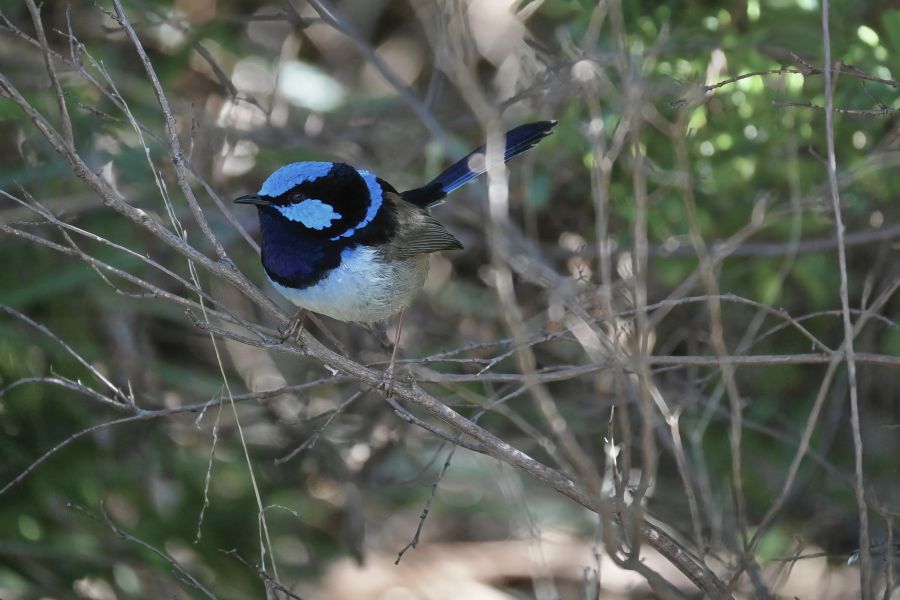
Solution?Plant more shrubs and bushes to create a bushy layer of 2-4 metres. This helps smaller birds such as Superb Fairy-wrens find places to hide. It’s also useful to include habitat elements such as log piles and rocks.
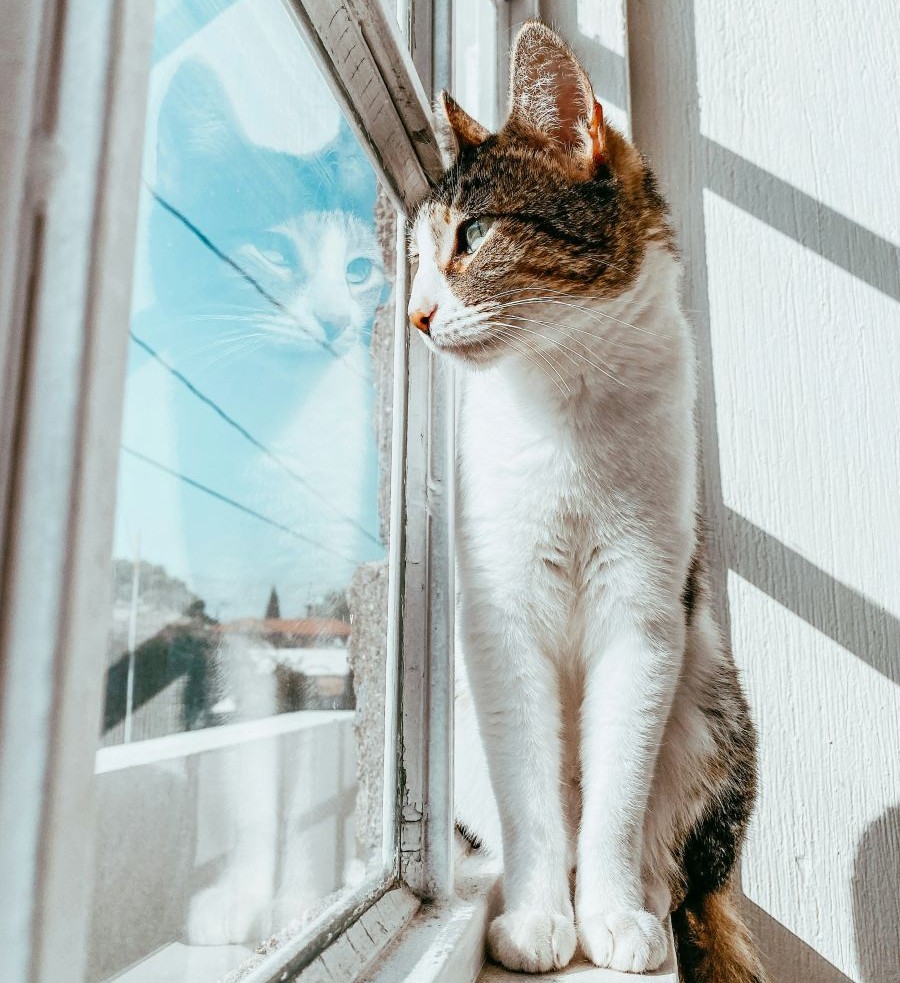
Solution? “Catios”, or cat patios, allow cats to experience nature but keep wildlife safe from predators.
8. Build a frog sauna
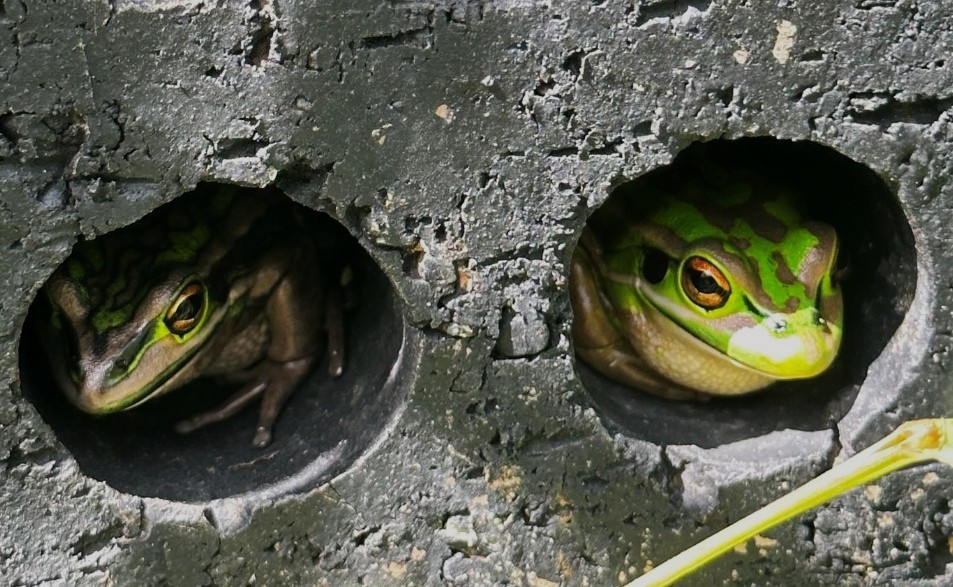
A DIY frog sauna helps frogs avoid the deadly chytrid fungus (Photo: Anthony Waddle)
Some of the best wildlife-friendly ideas are surprisingly simple. Frog saunas, for instance, are small structures with frog-sized holes, made from black bricks or similar materials that heat up in the sun. These structures help fight chytrid fungus, a devastating disease that’s pushing many Australian frog species toward extinction.
Chytrid thrives in cold conditions but dies in heat, making these warm refuges potentially life-saving for local amphibians. Instructions for building your own frog sauna are free, requiring little more than recycled materials and a sunny spot in your garden.
A shared future
Australian cities are important for conserving biodiversity – and our homes can help. Thoughtful, intentional design can better support the species that need our support.
If you want to find ways to co-habitate with native wildlife, click here for more solutions.
When Wildlife Moves In is part of the exhibition Making Good: Redesigning the Everyday, showing at the NGV Ian Potter Gallery. The exhibition explores how designers are reshaping the products and systems that shape our daily lives.
About the authors
Bethany Kiss, PhD Candidate, RMIT University; Mark Jacques, Professor of Architecture, RMIT University. Director, Openwork Pty Ltd., and Sarah Bekessy, Professor in Sustainability and Urban Planning, Leader, Interdisciplinary Conservation Science Research Group (ICON Science), RMIT University
Join Andris Heks, Yogic Psychotherapist, winner Best Actor, Blue Mountains, for his workshop to laugh as you never laughed before, as part of a movement to globalise people-bonding cheerfulness through kookaburra laughter contagion as an antidote to distressing world divisiveness.
Purchase your ticket here: https://events.humanitix.com/kookaburra-laughter-workshop
View the trailer and the GoFundMe page here: https://www.gofundme.com/f/globalise-unconditional-love-through-kookaburra-laughter
Key event information: - When? 10:15AM - 2:30PM, Sunday 4 October 2026 (1st day of Daylight Saving - 1 hour forward) - Where? Blue Mountains Planetary Health Centre, 33-39 Acacia St, Katoomba, NSW, 2780 - Fee? $60 or what you can afford - Note: please bring your own lunch
What to expect: - Learn how to stay cheerful for good - Learning the funny, human emulated, communal kookaburra laughter and meditation - How communal kookaburra laughter promotes bonding even amongst strangers - The awesome native treasure of the laughing kookaburra phenomenon - Why Kookaburra Yoga is the ‘most excellent of Yogas` - How communal kookaburra laughter contagion boosts the subtle and gross national product - How you could contribute to the kookaburra laughter contagion
This event is supported by Blue Mountains Planetary Health.
Purchase your ticket here: https://events.humanitix.com/kookaburra-laughter-workshop...
Come along to the Planetary Health Centre this Saturday for the next Skill Share Saturdays event!
This weekend`s agenda:
8:30AM - 10AM | Learn how to use your sewing machine class with Sherlie McMillan
8:30AM | Planetary Health Cafe open, serving Good Fat Pastry and Whisk and Pin
9AM - 10AM | Tai Chi and Qigong class with Virginia Field
10AM - 12PM | Learn how to grow WITH the Upper Blue Mountain permaculture workshop with Leni from Alchemy Farms
10AM - 3PM | Fashion Upcycling Workshop with Sherlie McMillan
10:30AM - 12PM | Learn to make focaccia from scratch with Laura Zucchetti (no experience needed)
1:30PM - 4:30PM | Planetary Health Bushcare with Karen Hising
For more information and to purchase a ticket, please visit the website: https://events.humanitix.com/skill-share-saturdays-at-the-planetary-health-centre...
Plate to Planet: Blue Mountains Food Security Fair 2026
📣HEADLINE SPEAKER📣
Our headline speaker is Julian Cribb AM – a renowned Australian science writer, journalist and author who has spent more than 50 years communicating science, agriculture, climate and global sustainability issues. He is the author of several influential books, including The Coming Famine (2010), Food or War (2019) and How to Fix a Broken Planet (2023), which explore the future of food systems, planetary health and humanity`s long-term survival.
He is widely recognised as one of Australia`s leading voices on global food security and sustainable development.
To register for his talk, and view the rest of the program, visit the website: https://events.humanitix.com/blue-mountains-2026-food-security-fair...
At our next Skill Share Saturdays event on Saturday 5th September, join Laura Zucchetti at 10:30am to learn how to make focaccia from scratch!
Come along for a 90 min class where you`ll mix, rest and stretch your own focaccia dough from start to finish, guided every step of the way. You’ll take home your dough to bake on the day in your own oven.
Sign up to this session, and view the other offerings on the day via this link: https://events.humanitix.com/skill-share-saturdays-at-the-planetary-health-centre...
Plate to Planet: Blue Mountains Food Security Fair 2026
We are pleased to announce that the program and registration for Plate to Planet: Blue Mountains Food Security Fair 2026 is now live!
Follow this link to view the program and register your place: https://events.humanitix.com/blue-mountains-2026-food-security-fair
Key information:
When? Saturday 10 October, 9AM - 4PM
Where? Blue Mountains Planetary Health Centre, Katoomba
Who is it for? Families, gardeners, enthusiasts, community groups and businesses, anyone looking to learn about how to be more resilient through local and sustainable food systems.
What to expect? Talks, workshops, demos, market stalls, family activities, music, food
Is there a cost? Entry to the Fair and Markets is free. Talks and workshops are ticketed (both free and paid) and have limited capacity, so please register in advance.
Program highlights:
🌏Headline talk: The age of renewable Food – Julian Cribb AM 🎋Wild edibles foraging workshops – Diego Bonetto, Eat More Weeds 🏞️The importance of bioregions in uncertain times – Rowe Morrow, Permaculture Matters 🥒Home canning and food preservation workshop – Kirsty Berté, Permaculture Hawkesbury Valley 🏡Designing your own Permaculture Property – Leni Nyssen, Alchemy Farms 🍃Utilising what’s in front of you – Uncle Lex, The Ganya Shed 🪱How to worm farm - BMCC 🎸Live music by Olivia Dustmann 🌾Community crop and seed swap
Tickets are limited so please register your place now: https://events.humanitix.com/blue-mountains-2026-food-security-fair
We are also seeking stallholders for the event. If you are a grower, retailer, community organisation or business that would like to get involved, please reach out to [email protected]!...
Thank you to everyone that joined us at the Planetary Health Centre on Saturday for the first of our Skill Share Saturdays program!
The Centre was a hive of activity all day, and we heard from @alchemyfarms_permaculture, the @ediblegardentrailbluemountains team and Andy Mann. Also thanks to Sherlie McMillan from Greater Blue Mountains Rotary for teaching the Fashion Upcycling workshop, and Virginia Field for the Tai Chi and Qigong class.
The next event will be held on Saturday 1st August - you can register your place here: https://events.humanitix.com/skill-share-saturdays-at-the-planetary-health-centre
🖐Get involved!
Do you have a skill, program or interest that promotes planetary health that you`d be willing to share with members of the local community? We are looking for more workshop and session hosts for our future events.
Join us at the Planetary Health Centre in Katoomba on the first Saturday of every month for Skill Share Saturdays!
Our July program includes: - What to grow in a Blue Mountains climate - Eating for Earth - Tai Chi and Qigong - Fashion upcycling and clothing reuse workshop - How to get involved with the Edible Garden Trail
You are also welcome to bring any surplus seeds or produce for our Crop Swap, or wind down in the Planetary Health Cafe (until 2pm).
If you have a skill that you want to share, or any questions or queries, please contact [email protected]
Visit the website to view the full program of events and register your place.
Join Andy Mann, a 23 year old Lawson local, for their Eating for Earth session 🌏
Eating for Earth is a judgement-free plant-based educational workshop that all types of eaters are encouraged to attend. There will be a presentation about the environmental impact of diets, a discussion section, and best of all, food! The food will be fully plant-based.
Andy wants to help inform our passionate community about how we can better reduce dietary environmental impact.
The session will run from 11AM - 12PM on Saturday 4th July.
Other sessions include: - What to grow in a Blue Mountains Climate - Fashion Upcycling - Tai Chi and Qigong - Bushcare on the Planetary Health site - How to get involved with the Edible Garden Trail
To register your place, visit our website: https://events.humanitix.com/skill-share-saturdays-at-the-planetary-health-centre...
We’re excited to announce the second Blue Mountains Food Security Fair, taking place in Katoomba in October 2026.
This annual event will bring together growers, thinkers, makers, and community members to explore one of the most important challenges of our time: how we grow, share, and sustain food in a changing world.
Across the weekend, we’ll be exploring themes including: - Healthy soil and regenerative systems - Food and human health - Plant-based food futures - Home and community food resilience - Water-sensitive and climate-adapted growing - Indigenous food knowledge and systems - School food systems - Australia’s food procurement - Global food security challenges Expect a dynamic program of inspiring speakers, practical workshops, and hands-on experiences designed to leave you informed, empowered, and connected.
Key information Date: Weekend of 10th October 2026 Location: Blue Mountains Planetary Health Centre, Katoomba, NSW We’ll be announcing speakers and program details soon.
We are also inviting expressions of interest from individuals and organisations who would like to contribute to the program, host workshops, run a stall or partner with us.
Do you struggle making the most of your veggie garden all year round?
Join Leni from @alchemyfarms_permaculture on Saturday 4th July for her Permaculture Workshop: Learn how to grow WITH the Upper Blue Mountains seasons, rather than battling against them.
During the two-hour session, you`ll cover crop selection for different seasons, what to grow from seeds vs seedlings, frost and wind protection, and nurturing your soil with a seasonal cycle.
Register for this and other sessions as part of our Skill Share Saturdays program via this link: https://events.humanitix.com/skill-share-saturdays-at-the-planetary-health-centre...
From Saturday 4 July, we are opening up the Planetary Health Centre for our monthly Skill Share Saturdays program: https://events.humanitix.com/skill-share-saturdays-at-the-planetary-health-centre
Throughout each day, you can expect to find a variety of sessions focused on restoring the health of the planet, in terms of the environment, community and economy.
Sessions at the first event include:
- What to grow in a Blue Mountains climate - Plant-based eating - Tai Chi and Qigong - Fashion Upcycling and clothing reuse workshop
You are also welcome to bring any surplus seeds or produce for our Crop Swap, or wind down in the Planetary Health Cafe (until 2pm).
Visit the website to view the full program of events and register your place: https://events.humanitix.com/skill-share-saturdays-at-the-planetary-health-centre
Registrations essential.
We are also inviting expressions of interest from individuals and organisations who would like to contribute to the program - please reach out to [email protected] if you are interested!...
As global food insecurity increases, research suggests that the ‘planetary health diet’ is one solution. This calls for a shift towards a plant-based diet and more local food production. Local social enterprise Farm it Forward is showing how this can be done in school yards and one backyard after another.