Worker cooperatives may sound like something out of the 19th century, but they still exist in the age of global capitalism.
In Spain, for instance, the Mondragon Corporation is a huge worker-run cooperative based around 95 collectives – the largest cooperative in the world.
Worker cooperatives produce products or services. But they are run very differently. Workers can become members of the cooperative they work for by buying a share of the business. This gives them a vote in how the business is run and a share of net income, after costs have come out.
Co-ops do not have external shareholders – the profits stay with workers. Rather than bosses deciding and workers carrying out the tasks, worker cooperatives are based on democratic principles. Big decisions are discussed and then voted on, and each member gets one vote. They offer a direct way for workers to control their production and shape the economy.
In Australia, these models peaked in the 1980s. Most are gone, though a few older cooperatives are still running, such as Tasmanian recycling cooperative Resource Work Collective, founded in 1993.
In recent years, there’s been renewed interest in the model. The Earthworker cooperative network focused on Victoria’s Latrobe Valley. The goal: find new types of employment and products in a coal area undergoing transition.
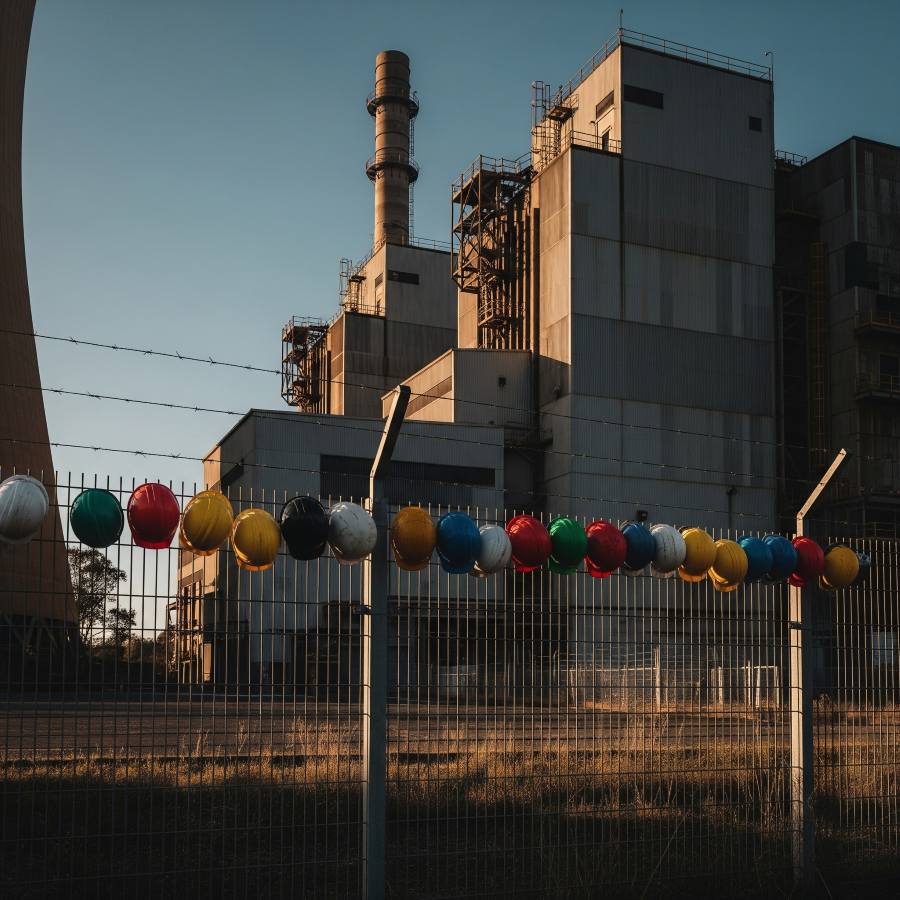
Coal plants in the Latrobe Valley provided jobs for generations of workers. Their closure poses real challenges.
How well does the model work?
Mondragon is the most well-known example. Founded in 1956 in the Basque region of northern Spain, Mondragon grew and became self-sustaining. It has developed supporting institutions such as research and development companies and even a university. It also established a credit union, which attracted capital and provided loans to cooperatives.
While Mondragon is a successful example, these organisations face a number of barriers to their survival.
Critics have argued worker cooperatives tend to fail as workers do not understand the market for their products, but Mondragon undercuts this criticism.
Worker cooperatives can have difficulties raising capital. Some banks can be reluctant to invest as they may lack familiarity or sympathy with the model.
Instead, workers may put some or all of their savings into the organisation to get it started. Taking these kinds of risks means some workers may be focused on getting immediate rewards, rather than investing surplus funds or building up cash reserves.
Workers can sometimes choose to transform a successful cooperative into a capitalist enterprise to achieve greater capital gains.
Surprisingly, trade unions are generally hostile and suspicious of worker cooperatives. Union organisers may fear worker-owners could see little need for trade unions in representing their interests, or that cooperatives could undercut union wages and conditions to remain competitive.
To date, worker cooperatives have had a limited impact in Australia, despite the relatively strong historical position of workers.
Compared to member cooperatives and other types, worker’s cooperatives tend to be short lived in Australia. That’s because most were formed by workers after an industrial dispute or to maintain employment during economic downturns.
In 1987, for instance, workers retrenched by a major communications company decided to form a co-op which became the Electronic Service Centre in Fairfield, New South Wales. A later example is Abrasiflex, a NSW company bought by workers facing retrenchment in 1993. Both cooperatives failed by the early 2000s.
Their popularity peaked in the 1980s, when the model was promoted by state Labor governments. Policymakers saw them as a short term means to resolve unemployment, rather than a long term means to secure economic democracy.
The model lost traction in the early 1990s due to an economic downturn, capital shortfalls and changing political circumstances.
New energy
The idea for Earthworker came from discussions between unionists and environmentalists over job creation and the environment. Earthworker founders were influenced by the Green Bans.
As the project’s website states:
Conflict can occur between environmentalists who want to shut down certain industries, and unionists who want to protect jobs […] we should work together for a “just transition” and create jobs that aren’t just better for the earth, but for workers too.
In this respect, Earthworker has much in common with the Cleveland Model in the United States, which links green business, local economic development and fair labour practices.
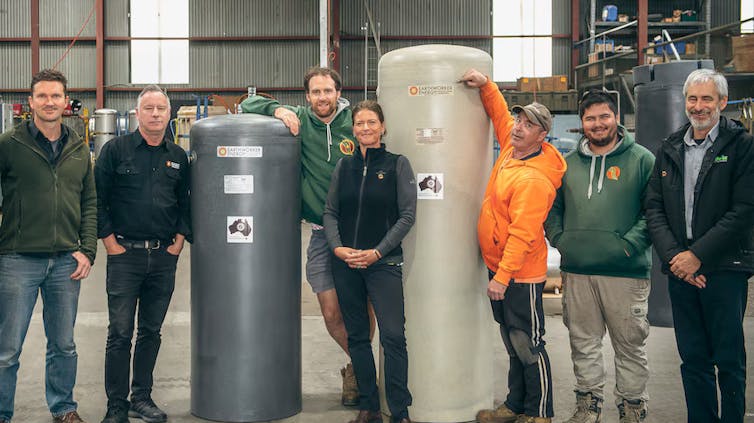
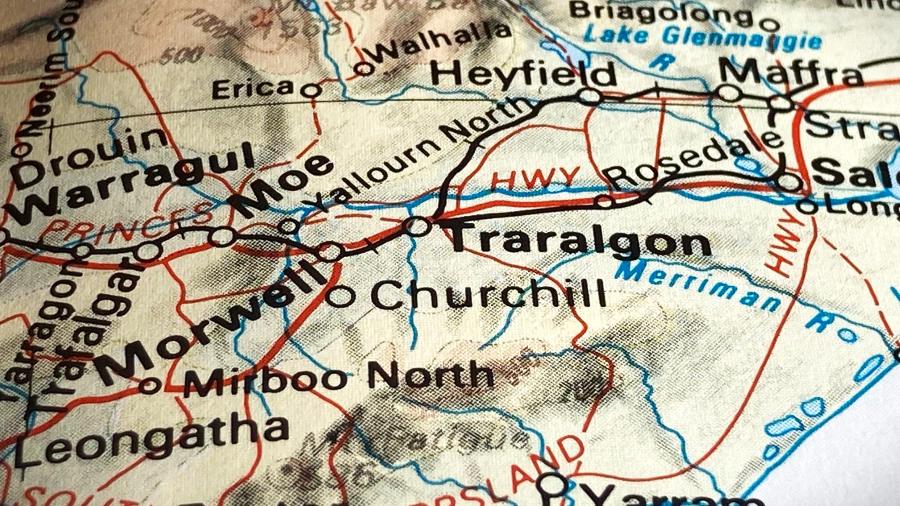
Earthworker only formally became a cooperative in 2011, though discussions date back to the late 1990s. In 2016, the network bought a hot water tank manufacturer in Morwell and began making their own tanks and solar hot water systems as the Earthworker Energy Manufacturing Co-operative. The cooperative is aimed at helping the Latrobe Valley’s transition away from coal power jobs.
Morwell and other Latrobe Valley towns are losing coal jobs. But new industries and business models are emerging.
Earthworker promotes the payment of trade union wage rates and conditions. The goal is to build a network of cooperatives supporting each other to build economies of scale.
Their other cooperatives include Earthworker Construction (residential construction, landscaping and maintenance) and Earthworker Smart Energy (improving thermal efficiency and comfort in homes). These cooperatives are generally small, with 10 members or fewer.
Another cooperative, Redgum Cleaning, closed down in 2023. It was not viable due to staff shortages, increased costs and work cancellations during the pandemic. Paying union rates in a competitive industry also assisted its demise.
By contrast, the Earthworker Energy Manufacturing Co-operative has found a way to survive in a competitive market.
Niche or mainstream?
Australian worker cooperatives ensure manufacturing and services remain locally owned and controlled. Could they expand? It’s possible.
Capital remains a major issue for Australian worker cooperatives such as Earthworker. Without capital, it’s hard to scale. Government efforts to expand domestic manufacturing often overlook this model.
The Earthworker network points to one future for Australian worker cooperatives. Despite the failures of the past, Earthworker’s focus on building a network of sustainable businesses rather than a single cooperative is a promising path.
Looking for a fun, educational and sustainable day out these school holidays?
Come along to Plate to Planet: Blue Mountains Food Security Fair in Katoomba on Saturday 10 October, with a line-up of free talks, activities and entertainment for all ages!
🌿 The Importance of Bioregions in Uncertain Times Join permaculture pioneer Rowe Morrow to explore how our land, water, food, energy and communities are connected - and how we can build a more resilient Blue Mountains.
🌱 Discover Old Man Saltbush Get up close to this remarkable native plant with Anne Elliot, and discover its potential as part of a more diverse and resilient food system.
🪱 Have a go at worm farming Learn how easy it can be to turn food scraps into valuable nutrients for your garden - with a hands-on worm farm activity from BMCC.
🎶 Enjoy live music Take a break, relax and soak up the atmosphere while enjoying live music by Olivia Dustmann throughout the day.
🎨 Kids` Corner - all day! Rock painting, crafts and story time, with plenty of fruit and veggie-inspired fun for younger visitors.
Explore local stalls, food, gardens, wildlife, sustainability and practical ideas for creating a more resilient food future.
Entry to the Fair and markets is free, with a range of free and paid sessions and workshops available throughout the day. Some sessions have limited capacity, so registration is recommended.
View the full program and register your place here: https://events.humanitix.com/blue-mountains-2026-food-security-fair
📅 Saturday 10 October | 9am–4pm 📍 Blue Mountains Planetary Health Centre, Katoomba...
Join Andris Heks, Yogic Psychotherapist, winner Best Actor, Blue Mountains, for his workshop to laugh as you never laughed before, as part of a movement to globalise people-bonding cheerfulness through kookaburra laughter contagion as an antidote to distressing world divisiveness.
Purchase your ticket here: https://events.humanitix.com/kookaburra-laughter-workshop
View the trailer and the GoFundMe page here: https://www.gofundme.com/f/globalise-unconditional-love-through-kookaburra-laughter
Key event information: - When? 10:15AM - 2:30PM, Sunday 4 October 2026 (1st day of Daylight Saving - 1 hour forward) - Where? Blue Mountains Planetary Health Centre, 33-39 Acacia St, Katoomba, NSW, 2780 - Fee? $60 or what you can afford - Note: please bring your own lunch
What to expect: - Learn how to stay cheerful for good - Learning the funny, human emulated, communal kookaburra laughter and meditation - How communal kookaburra laughter promotes bonding even amongst strangers - The awesome native treasure of the laughing kookaburra phenomenon - Why Kookaburra Yoga is the ‘most excellent of Yogas` - How communal kookaburra laughter contagion boosts the subtle and gross national product - How you could contribute to the kookaburra laughter contagion
This event is supported by Blue Mountains Planetary Health.
Purchase your ticket here: https://events.humanitix.com/kookaburra-laughter-workshop...
Come along to the Planetary Health Centre this Saturday for the next Skill Share Saturdays event!
This weekend`s agenda:
8:30AM - 10AM | Learn how to use your sewing machine class with Sherlie McMillan
8:30AM | Planetary Health Cafe open, serving Good Fat Pastry and Whisk and Pin
9AM - 10AM | Tai Chi and Qigong class with Virginia Field
10AM - 12PM | Learn how to grow WITH the Upper Blue Mountain permaculture workshop with Leni from Alchemy Farms
10AM - 3PM | Fashion Upcycling Workshop with Sherlie McMillan
10:30AM - 12PM | Learn to make focaccia from scratch with Laura Zucchetti (no experience needed)
1:30PM - 4:30PM | Planetary Health Bushcare with Karen Hising
For more information and to purchase a ticket, please visit the website: https://events.humanitix.com/skill-share-saturdays-at-the-planetary-health-centre...
Plate to Planet: Blue Mountains Food Security Fair 2026
📣HEADLINE SPEAKER📣
Our headline speaker is Julian Cribb AM – a renowned Australian science writer, journalist and author who has spent more than 50 years communicating science, agriculture, climate and global sustainability issues. He is the author of several influential books, including The Coming Famine (2010), Food or War (2019) and How to Fix a Broken Planet (2023), which explore the future of food systems, planetary health and humanity`s long-term survival.
He is widely recognised as one of Australia`s leading voices on global food security and sustainable development.
To register for his talk, and view the rest of the program, visit the website: https://events.humanitix.com/blue-mountains-2026-food-security-fair...
At our next Skill Share Saturdays event on Saturday 5th September, join Laura Zucchetti at 10:30am to learn how to make focaccia from scratch!
Come along for a 90 min class where you`ll mix, rest and stretch your own focaccia dough from start to finish, guided every step of the way. You’ll take home your dough to bake on the day in your own oven.
Sign up to this session, and view the other offerings on the day via this link: https://events.humanitix.com/skill-share-saturdays-at-the-planetary-health-centre...
Plate to Planet: Blue Mountains Food Security Fair 2026
We are pleased to announce that the program and registration for Plate to Planet: Blue Mountains Food Security Fair 2026 is now live!
Follow this link to view the program and register your place: https://events.humanitix.com/blue-mountains-2026-food-security-fair
Key information:
When? Saturday 10 October, 9AM - 4PM
Where? Blue Mountains Planetary Health Centre, Katoomba
Who is it for? Families, gardeners, enthusiasts, community groups and businesses, anyone looking to learn about how to be more resilient through local and sustainable food systems.
What to expect? Talks, workshops, demos, market stalls, family activities, music, food
Is there a cost? Entry to the Fair and Markets is free. Talks and workshops are ticketed (both free and paid) and have limited capacity, so please register in advance.
Program highlights:
🌏Headline talk: The age of renewable Food – Julian Cribb AM 🎋Wild edibles foraging workshops – Diego Bonetto, Eat More Weeds 🏞️The importance of bioregions in uncertain times – Rowe Morrow, Permaculture Matters 🥒Home canning and food preservation workshop – Kirsty Berté, Permaculture Hawkesbury Valley 🏡Designing your own Permaculture Property – Leni Nyssen, Alchemy Farms 🍃Utilising what’s in front of you – Uncle Lex, The Ganya Shed 🪱How to worm farm - BMCC 🎸Live music by Olivia Dustmann 🌾Community crop and seed swap
Tickets are limited so please register your place now: https://events.humanitix.com/blue-mountains-2026-food-security-fair
We are also seeking stallholders for the event. If you are a grower, retailer, community organisation or business that would like to get involved, please reach out to [email protected]!...
Thank you to everyone that joined us at the Planetary Health Centre on Saturday for the first of our Skill Share Saturdays program!
The Centre was a hive of activity all day, and we heard from @alchemyfarms_permaculture, the @ediblegardentrailbluemountains team and Andy Mann. Also thanks to Sherlie McMillan from Greater Blue Mountains Rotary for teaching the Fashion Upcycling workshop, and Virginia Field for the Tai Chi and Qigong class.
The next event will be held on Saturday 1st August - you can register your place here: https://events.humanitix.com/skill-share-saturdays-at-the-planetary-health-centre
🖐Get involved!
Do you have a skill, program or interest that promotes planetary health that you`d be willing to share with members of the local community? We are looking for more workshop and session hosts for our future events.
Join us at the Planetary Health Centre in Katoomba on the first Saturday of every month for Skill Share Saturdays!
Our July program includes: - What to grow in a Blue Mountains climate - Eating for Earth - Tai Chi and Qigong - Fashion upcycling and clothing reuse workshop - How to get involved with the Edible Garden Trail
You are also welcome to bring any surplus seeds or produce for our Crop Swap, or wind down in the Planetary Health Cafe (until 2pm).
If you have a skill that you want to share, or any questions or queries, please contact [email protected]
Visit the website to view the full program of events and register your place.
Join Andy Mann, a 23 year old Lawson local, for their Eating for Earth session 🌏
Eating for Earth is a judgement-free plant-based educational workshop that all types of eaters are encouraged to attend. There will be a presentation about the environmental impact of diets, a discussion section, and best of all, food! The food will be fully plant-based.
Andy wants to help inform our passionate community about how we can better reduce dietary environmental impact.
The session will run from 11AM - 12PM on Saturday 4th July.
Other sessions include: - What to grow in a Blue Mountains Climate - Fashion Upcycling - Tai Chi and Qigong - Bushcare on the Planetary Health site - How to get involved with the Edible Garden Trail
To register your place, visit our website: https://events.humanitix.com/skill-share-saturdays-at-the-planetary-health-centre...
We’re excited to announce the second Blue Mountains Food Security Fair, taking place in Katoomba in October 2026.
This annual event will bring together growers, thinkers, makers, and community members to explore one of the most important challenges of our time: how we grow, share, and sustain food in a changing world.
Across the weekend, we’ll be exploring themes including: - Healthy soil and regenerative systems - Food and human health - Plant-based food futures - Home and community food resilience - Water-sensitive and climate-adapted growing - Indigenous food knowledge and systems - School food systems - Australia’s food procurement - Global food security challenges Expect a dynamic program of inspiring speakers, practical workshops, and hands-on experiences designed to leave you informed, empowered, and connected.
Key information Date: Weekend of 10th October 2026 Location: Blue Mountains Planetary Health Centre, Katoomba, NSW We’ll be announcing speakers and program details soon.
We are also inviting expressions of interest from individuals and organisations who would like to contribute to the program, host workshops, run a stall or partner with us.
Do you struggle making the most of your veggie garden all year round?
Join Leni from @alchemyfarms_permaculture on Saturday 4th July for her Permaculture Workshop: Learn how to grow WITH the Upper Blue Mountains seasons, rather than battling against them.
During the two-hour session, you`ll cover crop selection for different seasons, what to grow from seeds vs seedlings, frost and wind protection, and nurturing your soil with a seasonal cycle.
Register for this and other sessions as part of our Skill Share Saturdays program via this link: https://events.humanitix.com/skill-share-saturdays-at-the-planetary-health-centre...
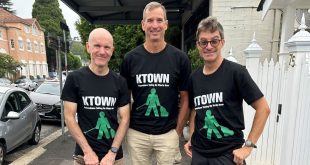
In Katoomba, a grassroots litter-picking group tackles rubbish before it reaches our water supply. Their story shows how local environmental action, fueled by community connection, can drive meaningful change for planetary health.